
This post was written by Julia Runcie, 2011 Mono Lake Intern.
As head of the California Department of Fish & Game’s Sierra Nevada Bighorn Sheep Recovery Program, Dr. Tom Stephenson has a job which takes him all over the range, from Mt. Langley to Dunderberg Peak. On Wednesday, August 31, it brought him to the Mono Lake Committee’s Theater & Gallery, where he gave a presentation as part of our “Refreshments with Refreshing ‘Ologists” summer lecture series.
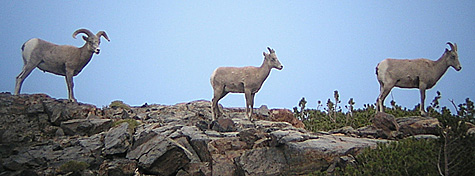
Bighorn sheep are the only federally-listed endangered species in Yosemite, Sequoia, and Kings Canyon National Parks, and the only federally-listed endangered mammal on the Inyo National Forest. The species has been the focus of intensive restoration efforts since the 1980s, a time when the historic population of over 1,000 animals had dwindled to two herds totaling about 250 sheep. Today, largely due to the efforts of the Recovery Program, there are about 400 animals in ten herds distributed throughout the range.
Many factors inhibit the recovery of the species. Diseases contracted from domestic sheep pose the most serious threat to Sierra bighorns, and predation by mountain lions is also a common cause of death. Since current sheep numbers are so low, random events like avalanches can severely affect population size. In spite of the harshness of the past winter, however, Stephenson noted that only five sheep in the northern herd units were killed by avalanches or ice falls.
The Recovery Program relies on monitoring and research to illuminate the most severe dangers to bighorn sheep and the best ways of responding to these dangers. One of the most successful recovery methods has been the translocation of sheep from one herd to another. Several sheep were recently translocated to the Lundy Canyon herd just north of Mono Lake. The sheep that were introduced to this herd have thrived, and there is evidence that augmenting herd size even by just two or three sheep can change the herd demographics and behavior enough to lead to better habitat selection and more efficient foraging.
Complete recovery of an endangered species is a rare event: since passage of the Endangered Species Act in 1973, 1,400 species have been listed and only 50 have recovered sufficiently to warrant delisting. Much remains to be learned about the mechanisms that lead to endangerment and those that make recovery possible. With a focus on better understanding of these mechanisms through rigorous study, the Recovery Program will continue to pursue a multifaceted science-based approach to saving the Sierra Nevada’s unique and fragile community of bighorn sheep.
It’s great news that the sheep are increasing in number and the transferance of sheep is most interesting. It decreases interbreeding anyway.