This post was written by Angie Glaser, 2013 Project Specialist.
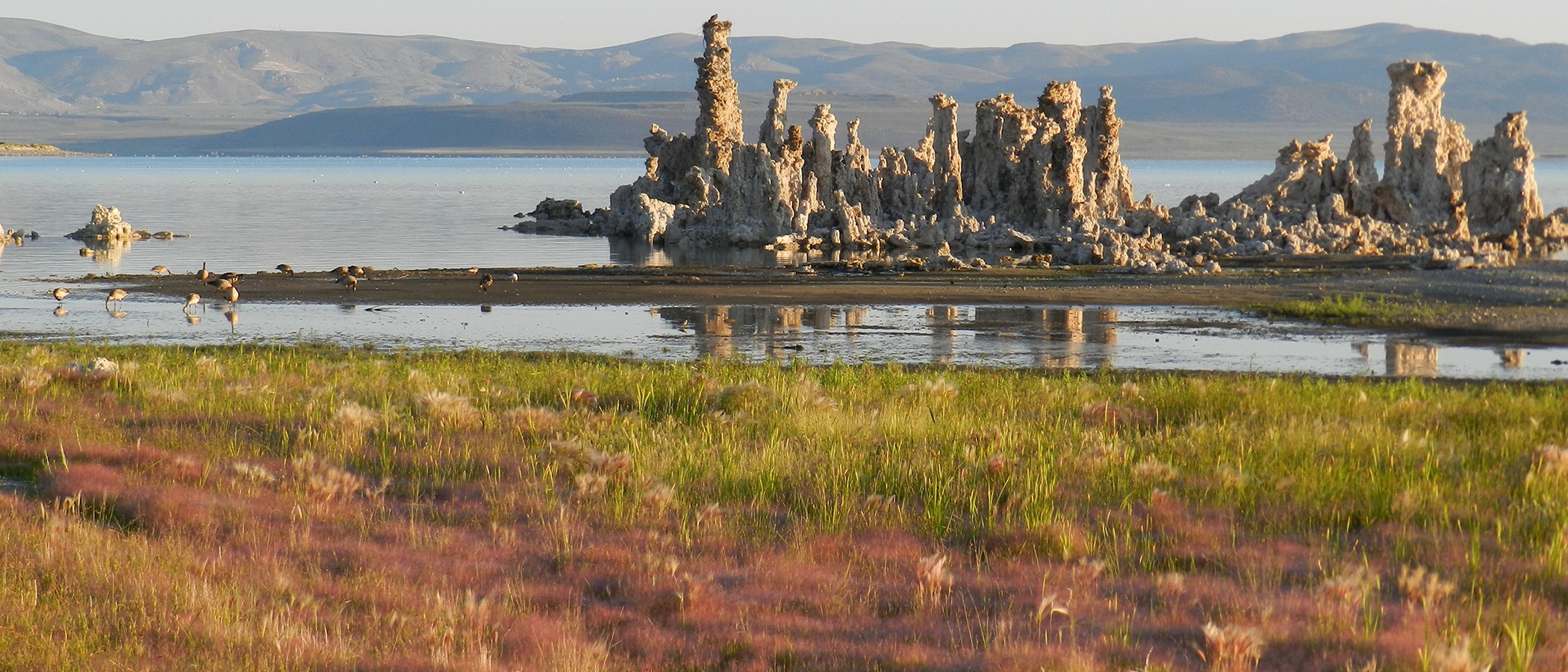
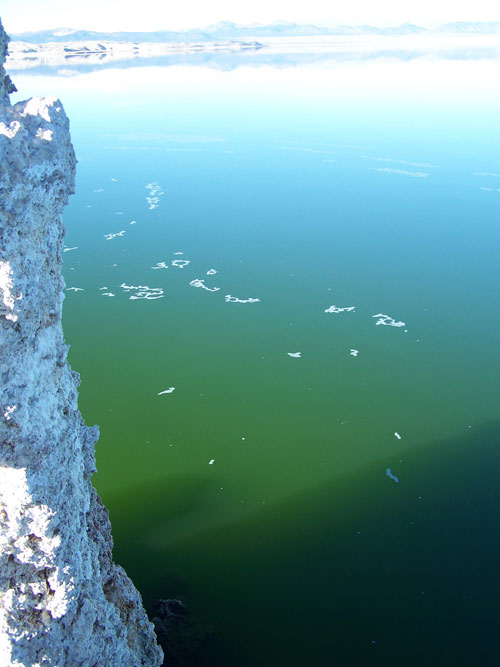
Mono Lake has donned its winter personality—the water is tinged green, the beach is covered in snow, and the rabbitbrush has turned brown. The whole basin has a calm, serene feeling that is a stark contrast from the hum of summer.
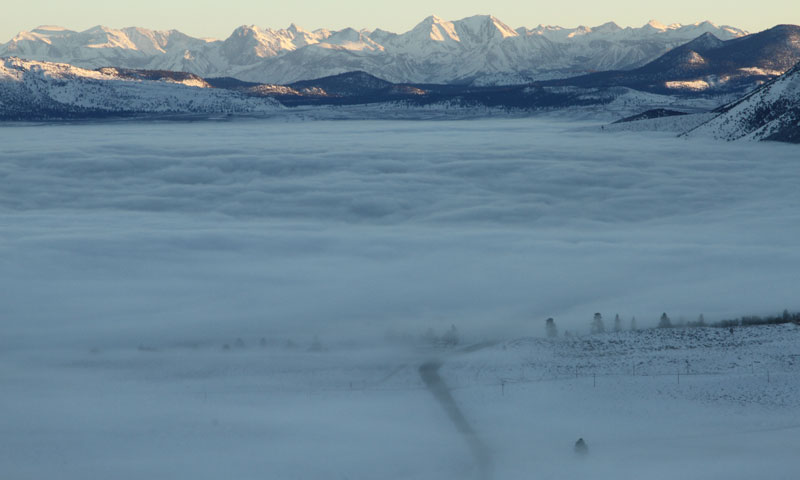
Mono Lake has been seeing fewer human visitors, of course, but the seasonal silence is more than that. In the summer, Mono Lake is teeming with life and activity, and in the dead of winter it just seems … quiet. Which begs the question—where are all of Mono Lake’s creatures hiding in the wintertime? What happened to the thousands of gulls that decorated the surface of the lake? What about the clouds of brine shrimp that danced underwater? I launched a natural history investigation to answer these burning questions, and what I found is a testament to Mono Lake’s fascinating and far-reaching ecological connections.
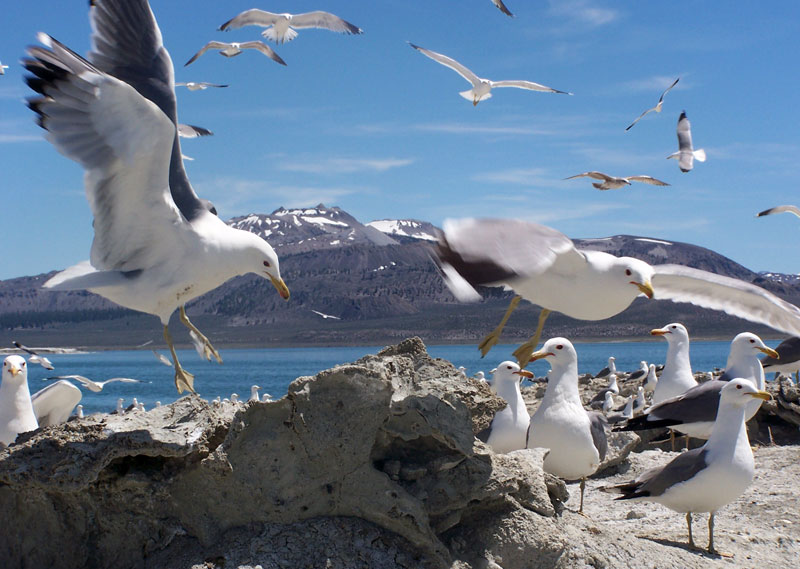
California Gulls: Every summer California Gulls dominate the surface of Mono Lake. In fact, Mono’s Negit Island and islets across the lake host the largest nesting colony of California Gulls in this state. By August, gull chicks are mature enough to follow their parents to the Pacific coast where they spend the winter. If you see a California Gull (identifiable by their tuxedo-like coloring) with a band on its leg, chances are it hatched at Mono Lake! Researchers have been tracking nesting gulls at Mono for about 20 years.
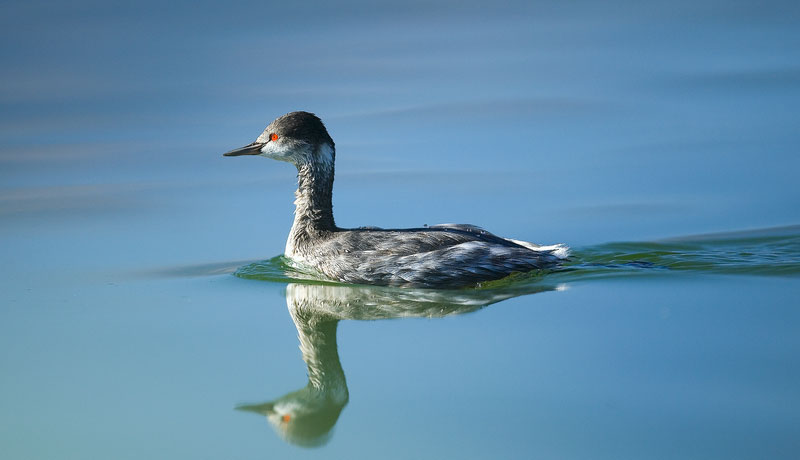
Eared Grebes: These charming waterbirds arrive in the fall en masse (2012 saw about 1 million eared grebes!). However, few people witness their arrival because they only migrate at night. After gorging on shrimp until they double or triple their size, Eared Grebes migrate to the Salton Sea, the Gulf of California, or the salt ponds in the San Francisco Bay to spend the winter. A few brave grebes will stay on Mono Lake all winter long, braving the cold.
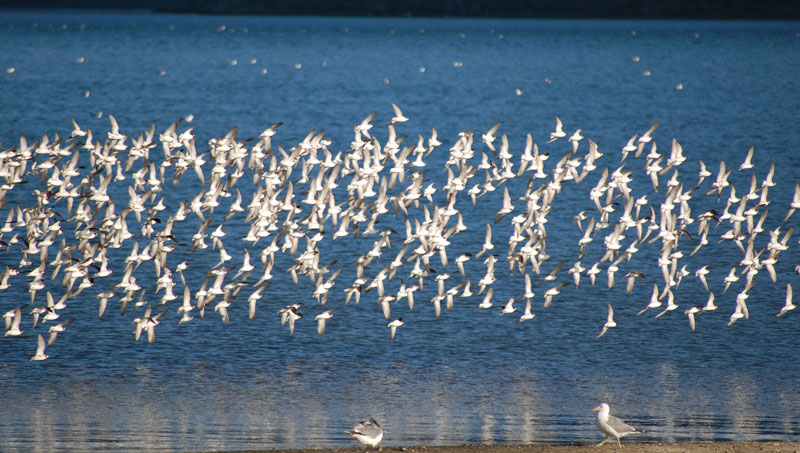
Wilson’s Phalaropes: Up to 80,000 of these dainty birds arrive on Mono Lake in late July to take advantage of the plentiful food. When they have fattened up and are well-rested, they fly 3,000 miles non-stop to the coasts of South America. That’s an impressive journey for a nine-inch-long bird! Wilson’s Phalaropes are one of the many migrating birds that use Mono Lake as a critical stop on the Pacific Flyway.
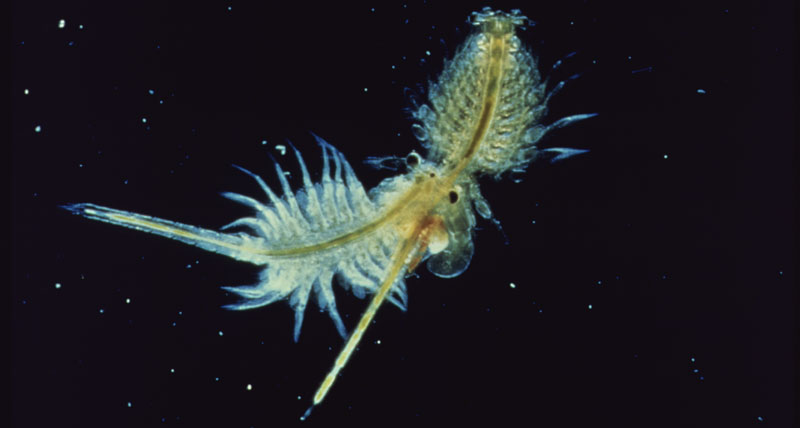
Brine shrimp: Since Mono Lake has no fish inhabitants, brine shrimp flourish in the summertime virtually free of predators and food competitors, reaching numbers as high as 4–12 trillion. Winter is a different story, and the lake is eerily devoid of the feathery creatures when the temperature drops. So where do they go? In a remarkable feat of adaptation, before all the lake’s shrimp die each fall, female brine shrimp produce cysts that spend the winter dormant at the bottom of the lake. Actually undeveloped embryos, the cysts develop into baby shrimp as the lake water warms. Just like that, a new generation of brine shrimp rises from the depths of the lake every spring.
Algae: Wintertime is algae’s time to shine. As a food source for trillions of brine shrimp, algae is gobbled up pretty quickly, which is why Mono Lake’s water is quite clear in the summer, at the height of the shrimp population. In the shrimp’s absence, the algae flourishes, turning the lake a deep green color.
Very nice article. Of course, the brine shrimp do have lots of predators…the many many birds that gobble the adults all summer.