
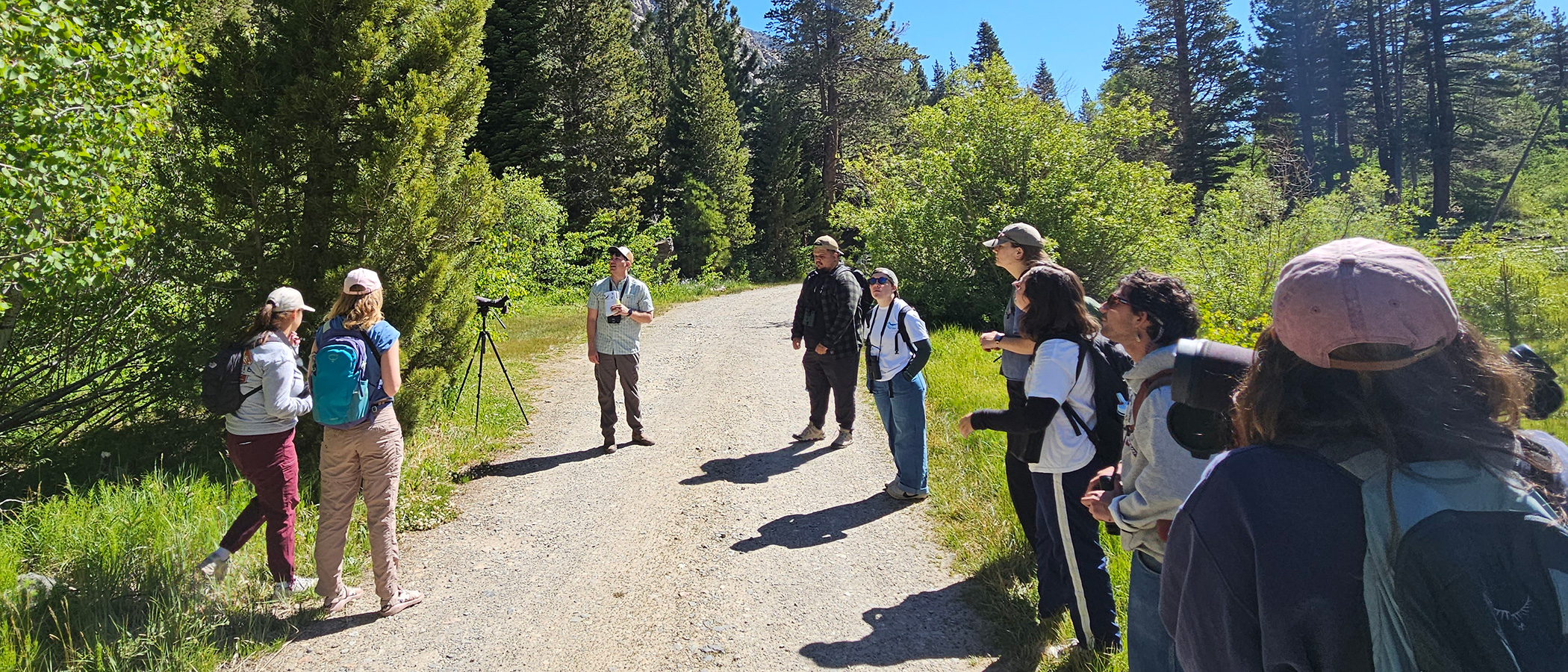
A summer Saturday morning in Lundy Canyon can take many forms. The sun can draw the line between protection and exposure on the surface of your skin, the clouds can centralize in the canyon and sprinkle down for an hour before wandering away into the mountains, and the wind can howl so loudly that the aspens are not the only ones quaking in their boots.
As the Birding Intern for the Mono Lake Committee, I come to Lundy Canyon every Saturday at 8:00am to lead my weekly bird tours, watching the environment around me change from month to month, week to week, and sometimes from hour to hour. Even when I struggle to notice a difference in temperature or cloud cover from the week, day, or hour before—no two days or two hours are the exact same—the earth is dynamic. But the birds always notice, inspiring a unique bird tour each day we make our way up Lundy. As expected from any living creature, birds change their behavior based on the physical conditions around them. If it’s too hot, they may want to hide from the sun, if it’s rainy and wet, they may want to protect themselves from the cold, and if it’s too windy, they may want to save their serenades for a quieter day. But even when we can’t see them or hear them singing, we can feel birds everywhere.
While the title of the Saturday tour is called “Birding in Lundy Canyon,” it is unavoidable to discuss all of the factors that bring birds into the canyon in the first place. Why do they want to be here? Well, why do I want to be there? I love the cooling shade of the Jeffrey pines and white firs that begin to tower over me as I make my way up past the Lundy Lake Resort. I love walking along the creek and soaking my feet in the crossing that bisects the path. I love watching buds turn into flowers and flowers turn into berries, and then gorging on the ripe ones as any foraging animal should. I love when there’s a break in the trees and the creek expands into a shallow pond engineered by beavers who refuse to reveal themselves even just to collect my complements.
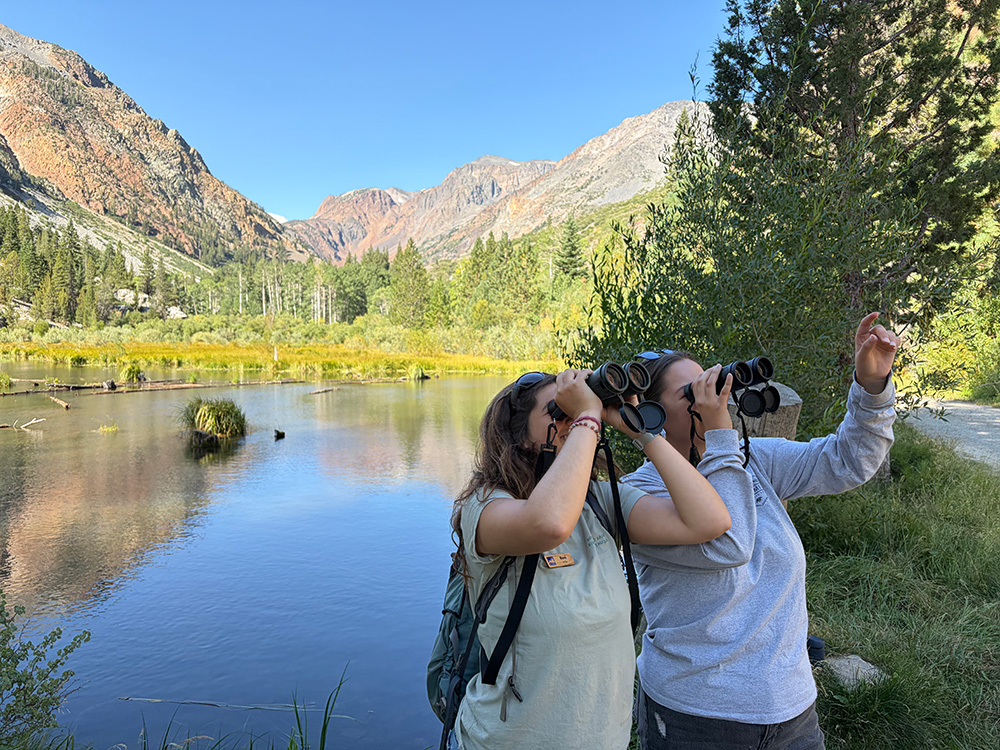
Brewer’s Blackbirds love to hide in the willow thickets along the ponds, calling like an old camera click to communicate across their large flock. Fox Sparrows prefer to sing from the lower branches of the tall Jeffrey pines, out in the open until they notice me finally capturing them in the scope and hide in the woods once again. American Robins have a taste for berries and grubs dug up from well-fertilized soil, even into the colder months as the berries ferment and tickle their brains with a drunk sensation. Birding in Lundy Canyon can involve seeing lots of birds, it can involve hearing some and seeing many fewer, but it always involves immersing into a bird’s environment. We’re not so different, just little earthlings trying our best.
On Lundy walks this season, we have been lucky enough to see all the colors of the rainbow. The Western Tanager offers vibrant reds, the Bullock’s Oriole flashes orange across the sky, the Northern Yellow Warbler continues to be aptly named, the Brewer’s Blackbird sparkles in greens and purples, and the Steller’s Jay reveals its blue every time it calls from a tree directly above you. We have also heard the consistent and beautiful songs and calls of the Western Wood Pewee, Mountain Chickadee, Warbling Vireo, Northern House Wren, and Song Sparrow. These have been incredibly special moments, however never happening all at once.

What birding in Lundy really teaches you is what I think birding is all about—admiring a bird, any bird. The best way to learn about a bird, or birds in general, is to watch them, enthusiastically, for as long as they allow you to. This way, a Brewer’s Blackbird is never just a blackbird; it’s a snapshot of the northern lights with an eyeball like the full moon. An American Robin is never just a robin, it’s an elegant parent with sweet little eye rings and an ability to find the fattest, juiciest grub of all time. A Song Sparrow doesn’t just sing; it screeches and trills.
Identifying birds can be amazing and thrilling, but spending time with birds, more than anything for me, is truly grounding. I feel so lucky to feel like I know them better now than I ever would have thought to, and I encourage you, wherever you are, to open your ears and eyes to the birds around you that live as your neighbors and can grow to be your old friends.
Top photo by Teri Tracy.