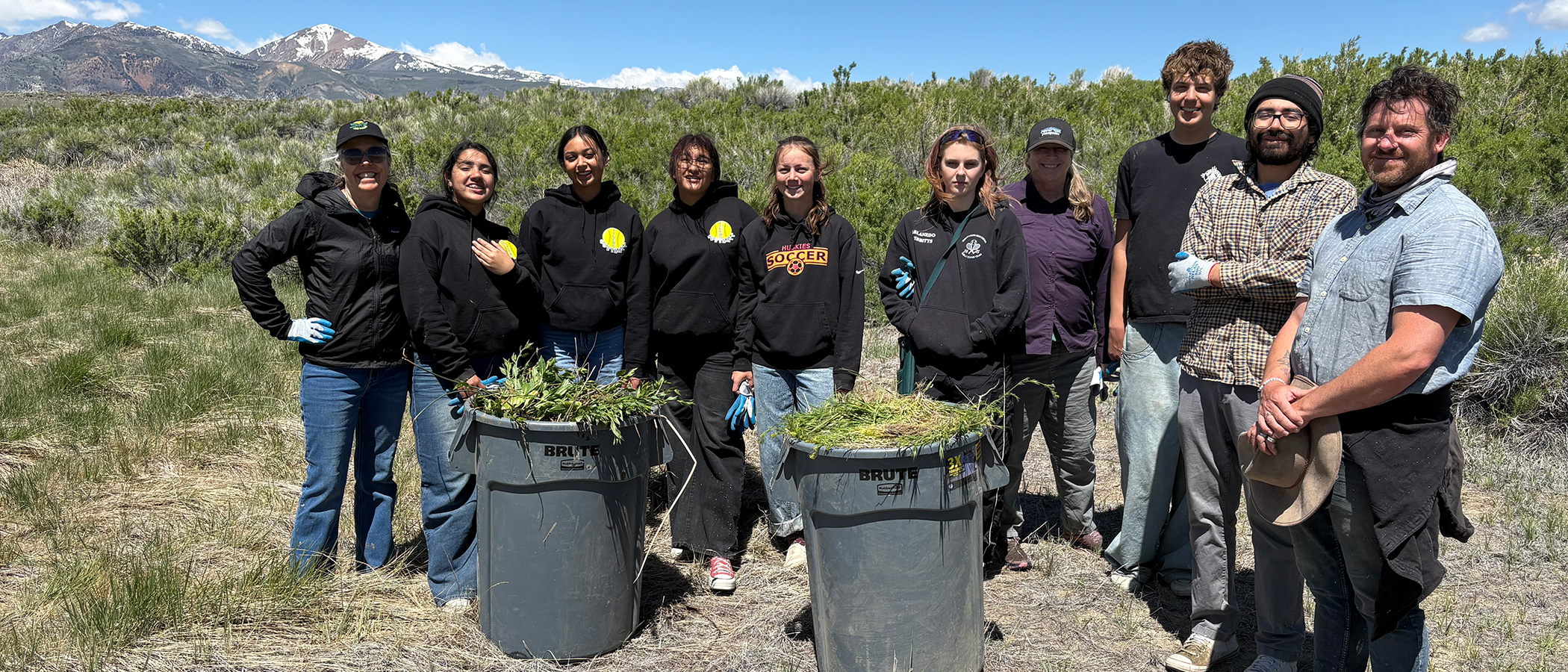
Over the last three months, students, teachers, and organizers of the Experience Ambientalia program have been busy learning more about Mono Lake, being good stewards of the Eastern Sierra, and expanding the program to more saline, Great Basin lakes.
Monthly activities at Mono Lake
The local chapter of Experience Ambientalia has celebrated three environmental holidays since March.
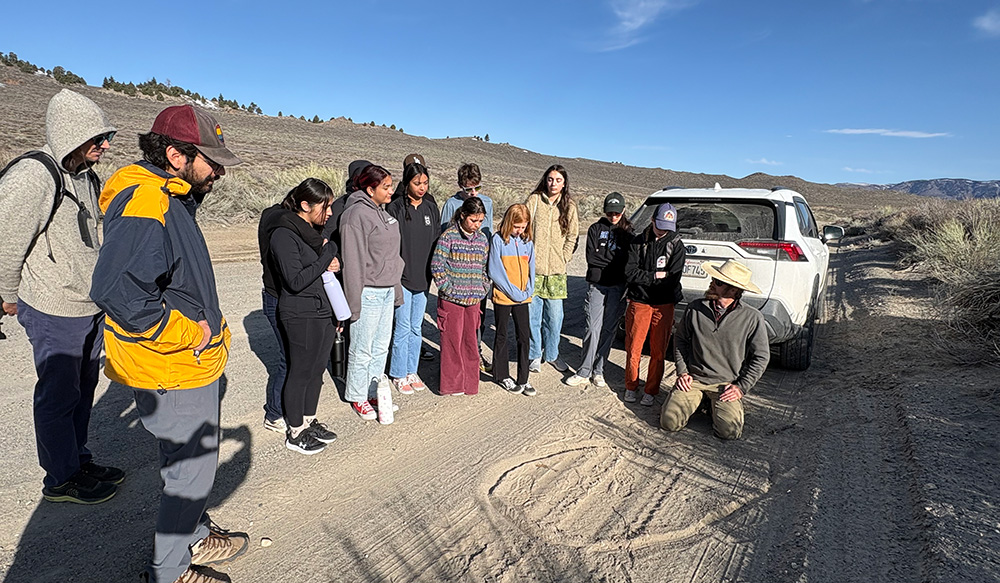
In recognition of March Mammal Madness, students from the Eastern Sierra participated in a wildlife tracking workshop with California Department of Fish & Wildlife biologist Phil Johnston. Phil is a master tracker and taught students how to read animal footprints, scat, burrows, and other signs left behind in the landscape. He introduced students to the many mammals of the Eastern Sierra and the unique adaptations that allow them to thrive in a high desert environment. After learning about mammals native to the Eastern Sierra, several Mono Basin students joined Zoom calls with peers from Laguna Mar Chiquita in Argentina and Great Salt Lake in Utah to compare the animals that live near each lake and develop presentations to share with the larger group.
Then, in April, students celebrated Earth Day by learning about the incredible migration of the Wilson’s Phalarope. Wilson’s Phalaropes breed and raise young in the grasslands around Chaplin Lake in Canada before flying to the Great Basin, primarily staging at Lake Abert, Mono Lake, and Great Salt Lake. At these lakes, they feast on flies and brine shrimp, nearly doubling their weight and molting into fresh feathers before continuing south. Along the way, they may stop or winter at sites like the ECUASAL salt lakes in Ecuador, or Laguna Mar Chiquita and Laguna de Pozuelos in Argentina. After building this migratory pathway through a game, students learned about threats facing each of these saline lakes and discussed ways to better support and steward these critical habitats. They wrapped up the activity by learning how to use iNaturalist to document and identify species.
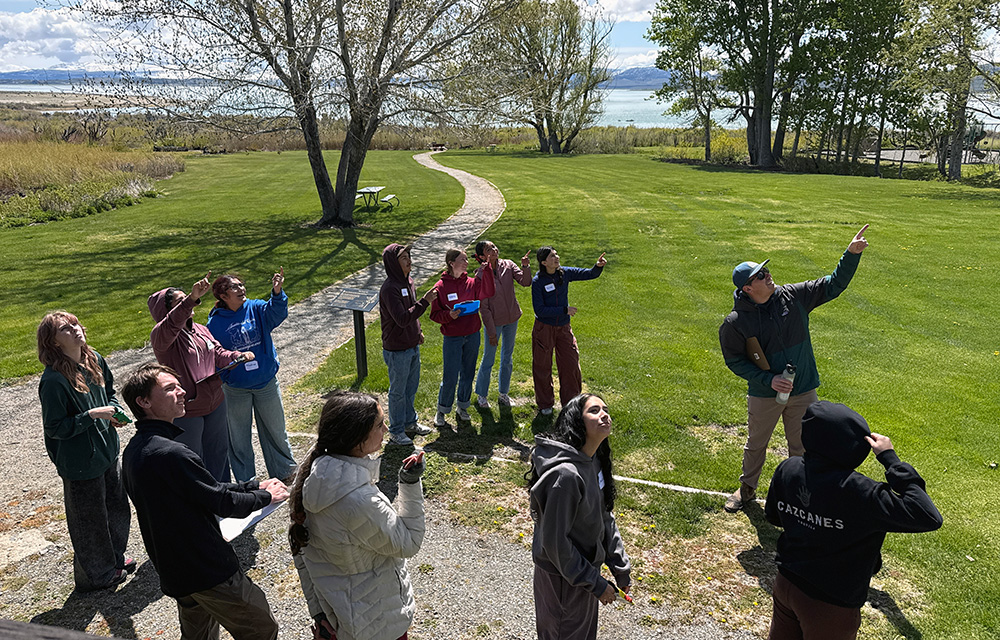
Finally, in May, students participated in a World Migratory Bird Day activity at DeChambeau Ponds, stepping into the role of field biologists as they surveyed the site’s bird community. Armed with survey sheets, students documented not only which species were present, but also their abundance across the ponds. The group was joined by Jake Suppa of the DeChambeau Creek Foundation, who shared the history of the DeChambeau family in the Mono Basin and the importance of the ponds for migratory birds. After completing the bird survey, students removed more than 300 pounds of invasive plants from the area.
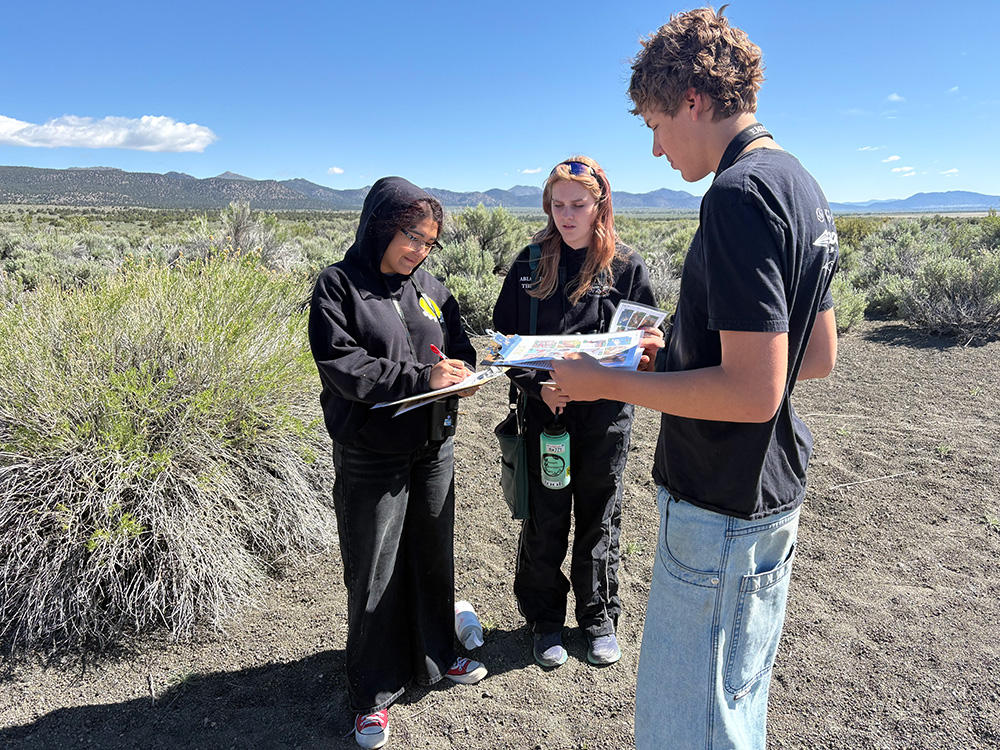
Students will next run a fundraiser barbeque at the Sunday picnic of the Mono Basin Bird Chautauqua in a few weeks to help cover the remaining costs associated with participating in an international exchange at Laguna Mar Chiquita this July with their international peers. The barbeque is open to everyone—we hope to see you there if you’re in town!
Experiencia Ambientalia founder recognized
On a spring evening in early May, Eastern Sierra community members, teachers, students, and friends gathered at Mammoth Mountain’s Parallax Restaurant to celebrate community engagement, stewardship, and this year’s Andrea Lawrence Award recipient, Marina Castellino, the founder of the Experiencia Ambientalia program.
We were lucky to have Marina with us in person to accept the award and speak about how she started and has grown the program. It was also a treat to hear from program leaders, high school teachers, and especially the students who have been inspired by Marina’s commitment and passion for saline lakes across the hemispheres.
Read more about the inspiring evening here.
Program expansion in the Great Basin
Following the Andrea Lawrence Award festivities, Marina and I hit the road to meet with prospective teachers, students, and non-profits interested in strengthening and expanding Experience Ambientalia chapters across the Great Basin.
Our first stop was southeastern Oregon and the Lake Abert region. Like Mono Lake, Lake Abert is a highly saline, alkaline lake that serves as critical habitat for migratory birds, particularly Wilson’s Phalaropes. Unfortunately, unlike Mono Lake, Lake Abert has few meaningful protections and has dried up completely multiple times in the last three decades.
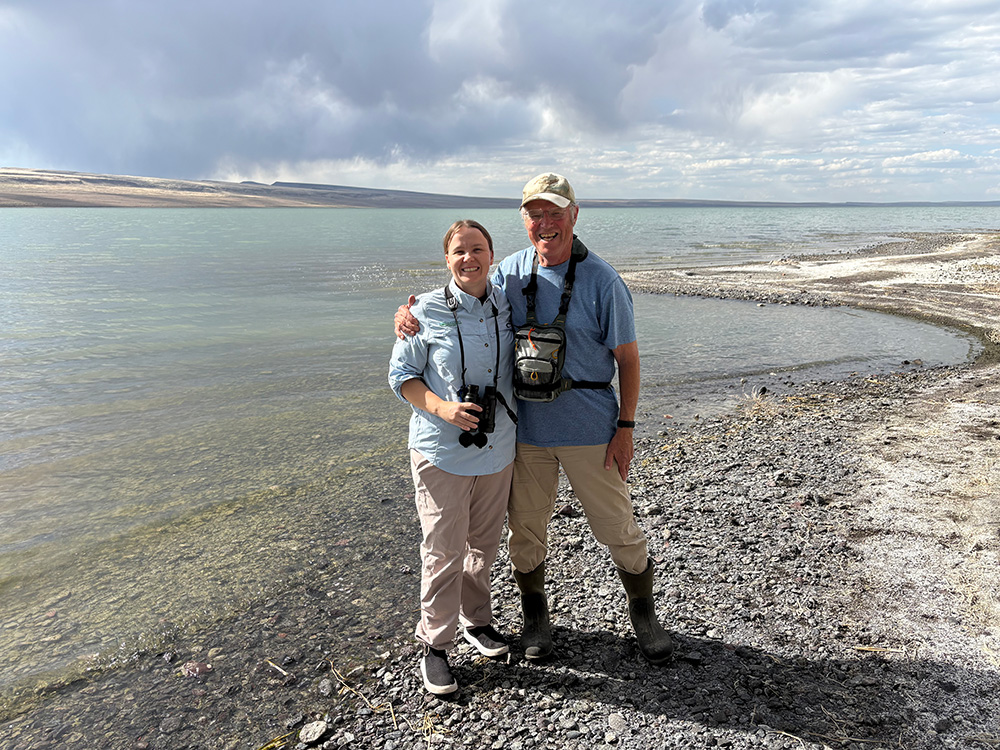
During our visit, we connected with James Johnson, a science teacher at Lakeview High School, as well as students, educators, scientists, and community partners interested in environmental education and stewardship. Together, we spent time imagining what an Experience Ambientalia chapter rooted in the Lake Abert region could look like and discussed opportunities for youth engagement, saline lake education, and international connection across the Ambientalia network.
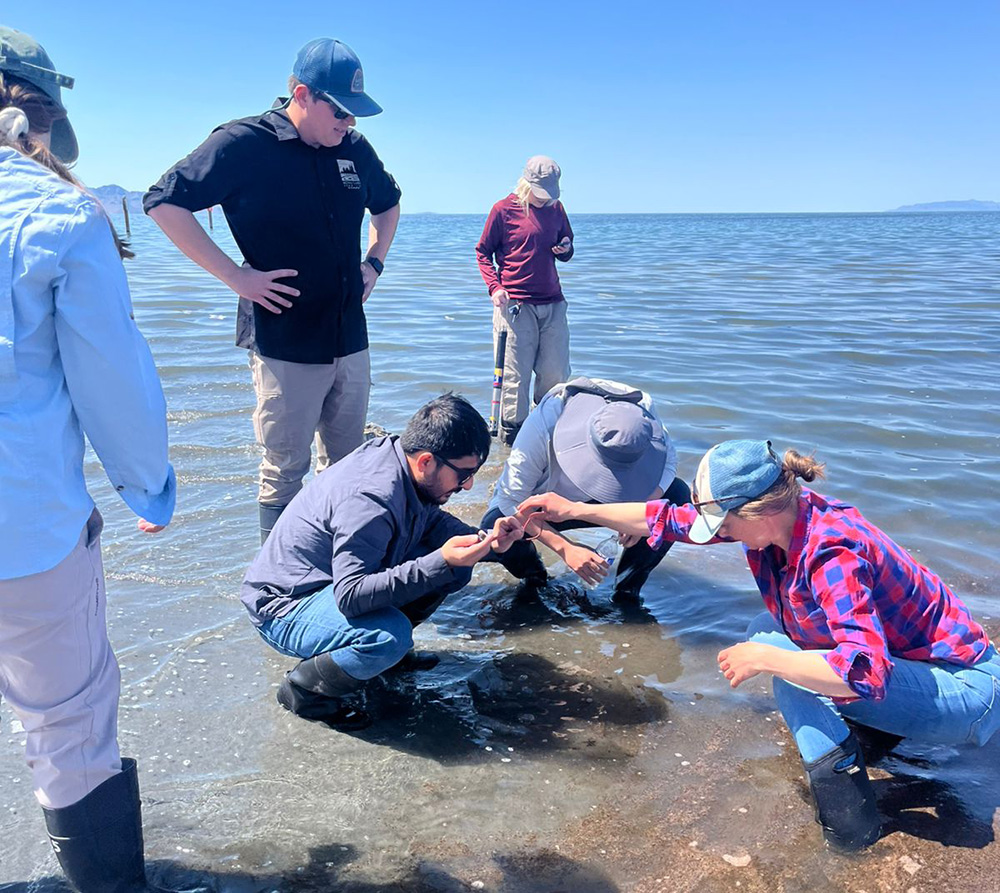
After departing Oregon, Marina and I headed to Salt Lake City, Utah to attend the Great Salt Lake Issues Forum. There, we learned more about both the successes and challenges of efforts to restore Great Salt Lake to a healthier ecological state. While in Utah, we connected with non-profits, teachers, and a group of high school students who have organized their own club to participate in the Experience Ambientalia program.
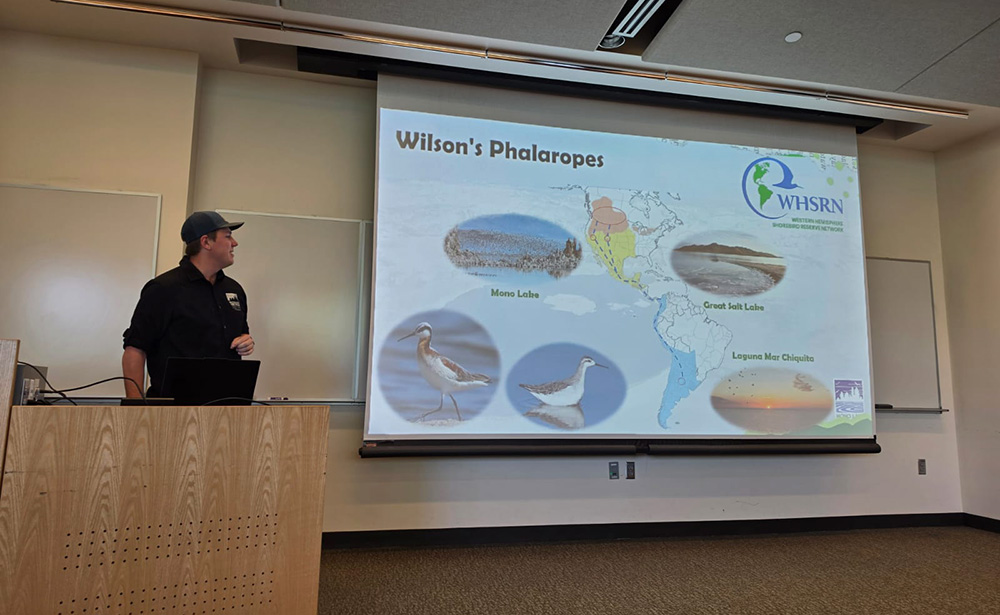
It’s an exciting time for the program as momentum builds. Our hope moving forward is to continue strengthening relationships at both Lake Abert and Great Salt Lake and more firmly establish thriving Experience Ambientalia chapters throughout the Great Basin.
About the Experience Ambientalia program
Experience Ambientalia is a community group that connects young people to their home ecosystems, introduces them to sister saline lakes across the Western Hemisphere, and encourages environmental stewardship. It was launched in 2021 by Fundación Líderes de Ansenuza and the Western Hemispheric Shorebird Reserve Network at Laguna Mar Chiquita in the Cordoba Province of Argentina. The program came to Mono Lake in 2022 because Laguna Mar Chiquita and Mono Lake are sister lakes that provide critical habitats for Wilson’s Phalaropes, a migratory shorebird that is at risk due to the declining health of saline lakes worldwide.
Top photo by Ryan Garrett.