After three decades of litigation, Walker Lake moves ever closer to its day of reckoning.
In a clear departure from a history of legal delay, US Magistrate Judge Craig S. Denny recently denied a motion by a group of Walker Basin ranching and agricultural interests (defendants) asking Mineral County and the Walker Lake Working Group (plaintiffs) to supplement prior responses to discovery requests, or pre-trial information exchanges.
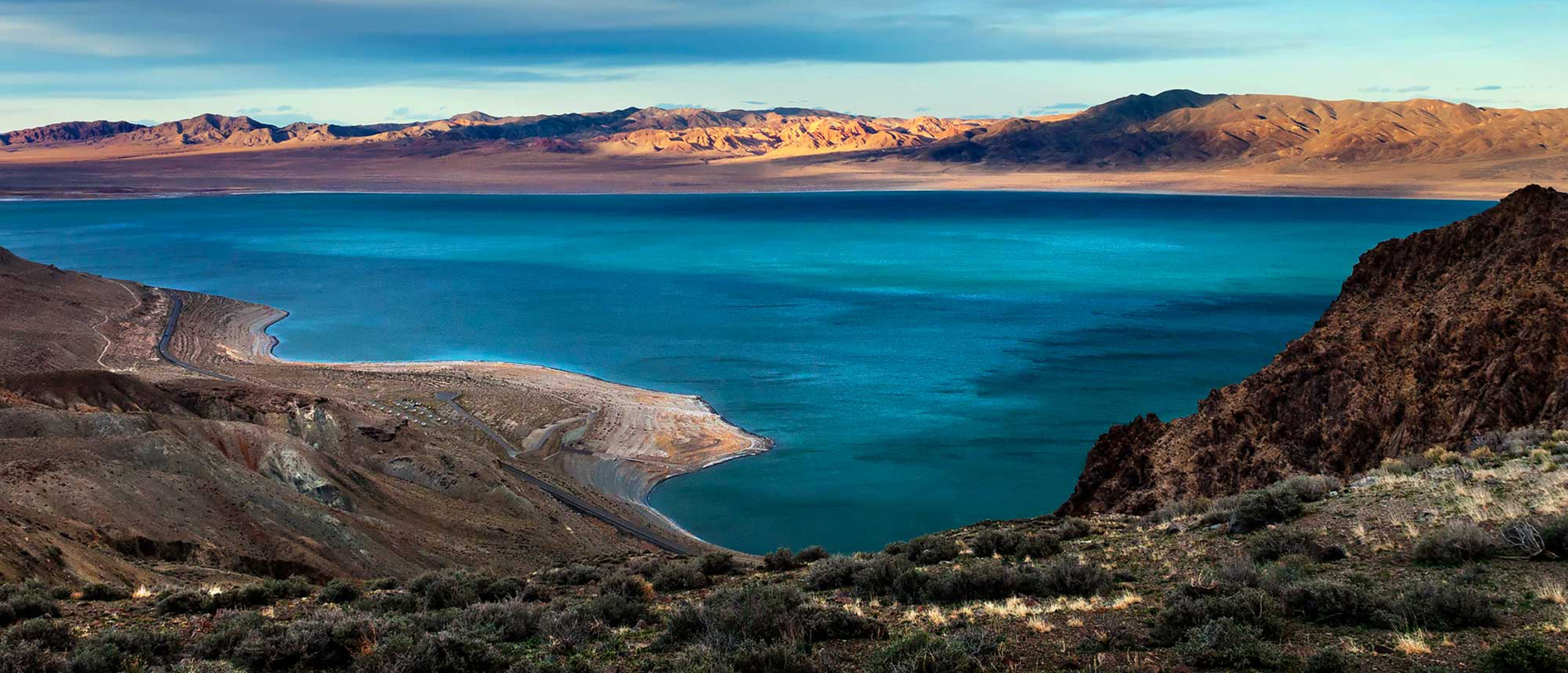
At stake is the future of Walker Lake, a rare desert lake in Mineral County, Nevada. After more than a century of reduced inflows from the Walker River system, the lake has shrunk dramatically in size and salinity has soared. The plaintiffs’ lawsuit, Mineral County v. Walker River Irrigation District, filed in 1994, asserts that state officials and the Decree Court have failed in their continuing duty to protect Walker Lake’s Public Trust values.
Walker Lake lies about 40 miles northeast of Mono Lake. Like Mono, it has no outlet and has suffered from reductions in inflow due to upstream diversions of its tributary streams. Unlike Mono, it was once home to a thriving fishery of Lahontan cutthroat trout and tui chub, which was extirpated by upstream water diversions that caused Walker Lake to drop 181 vertical feet between 1882 and 2016.
The defendants’ motion specifically requested the plaintiffs “to identify the excessive and unreasonable consumptive uses of water on which Mineral County bases its claims.”
Attorneys for the plaintiffs argued that, “an order requiring supplementation would be futile because, as defendants well know, it is an impossible task for any party to attempt to parse out which specific consumptive uses in the Walker River Basin, over its century or more of diversions, caused Walker Lake to lose its Public Trust values.”
The plaintiffs’ attorneys added, “in fact, the level of detail the defendants demand is not relevant to this litigation, which is primarily about the remedies required to restore Walker Lake. It is undisputed that Walker Lake presently fails to support its historic Public Trust values, as the Ninth Circuit has already recognized.”
On May 12, 2026, Judge Denny denied the defendants’ motion and ordered the parties to meet and discuss each and every discovery request that remains in dispute. The discovery phase of this litigation is scheduled to end on October 30, which likely will be followed by dispositive motions and a bench trial. At that time Walker Lake, its fish, and its wildlife will have their day in court.
Walker Lake’s new legal team has really been coming through during this contentious discovery phase. The Walker Lake Working Group is responsible for paying these attorneys as they fight for the future fishery and wildlife habitat of Walker Lake. Please help if you can.
Click here to donate to the Walker Lake Working Group
Top photo courtesy of the Public Policy Institute of California.