Los Angeles leader sets forth “commonsense” plan giving State Water Board fast, affordable path to heal Mono Lake and benefit LA
Last year Richard Katz, President of the Los Angeles Water & Power Commission, made headlines in the Los Angeles Times when he proclaimed, “This is a solution with lots of winners” and that once the water starts flowing, “we won’t need Mono Lake water to meet the supplies in LA.”
Now Katz, who has since retired, has written a detailed letter spelling out how the Los Angeles Department of Water & Power (DWP) is dramatically expanding a local water recycling and groundwater recharge project, enabling the agency to pause diversions from Mono Lake. Katz makes a compelling case to the State Water Board for the affordable, win-win plan.
The letter looks beyond traditional conflicts of water policy to a refreshing, mutually beneficial future built on the abundance of local water supplies DWP has successfully engineered for the City.
The Katz proposal is simple: Use the new local water supply to meet the needs of Los Angeles and pause Mono Basin water diversions to meet the needs of Mono Lake.
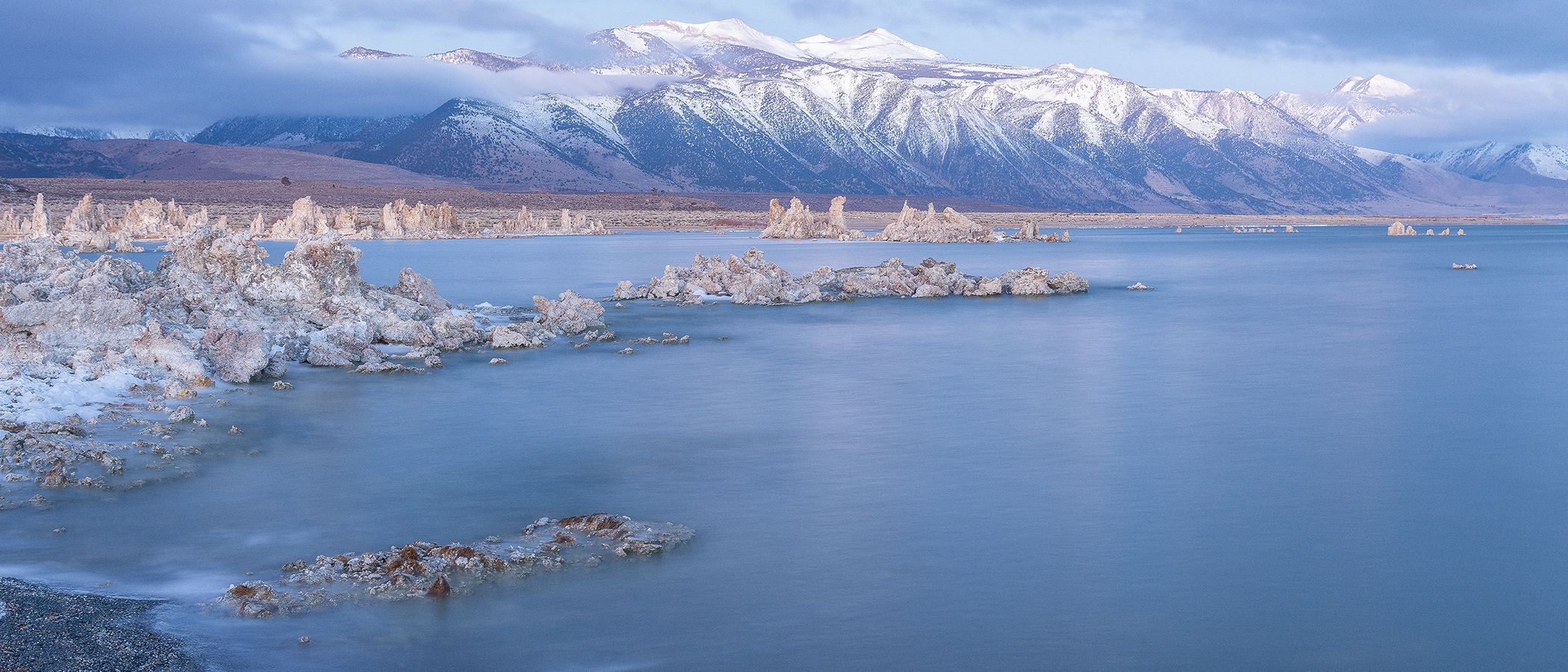
This year, the State Water Board plans to tackle the problem of ongoing DWP water diversions that are the primary cause of the Mono Lake’s failure to reach its mandated protection level. The State Water Board is responsible for protecting the lake’s public trust resources at the 6,392-foot surface elevation, yet the lake is only halfway there and a decade overdue.
Basin water diversions to meet the needs of Mono Lake.
“The SWRCB hearing process in 2026 could be efficiently and cost-effectively focused on the implementation of the established lake level requirement by using the recycled water produced by the Tillman facility,” Katz argues in his letter.
Katz writes with the wide-angle perspective and wisdom gained from decades of leadership as a state legislator representing LA, years as a member of the State Water Board, and, recently as Commission President leading DWP. From this vantage point he encourages a “swift, straightforward, and impactful process that will decisively and at long last restore the lake level of Mono Lake.”
On the other hand, DWP attorneys have demonstrated they will take a combative approach to any State Water Board attempt to implement its long-standing Mono Lake decision, possibly by attempting to eliminate the Board’s existing lake protection mandate and even attacking the authority of the State Water Board itself.
Katz says it doesn’t have to be that way.
“…I believe it is in the best interest of Los Angeles and the State of California to avoid a prolonged contentious SWRCB hearing. There is a commonsense alternative for meeting the needs of Mono Lake and Los Angeles Department of Water and Power that can be quickly implemented by the State Board.”
-Richard Katz
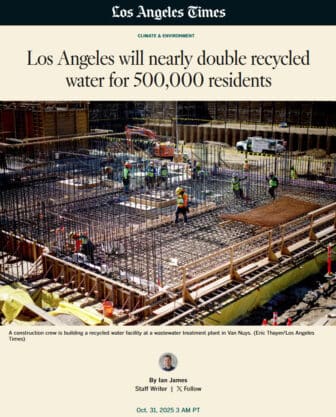
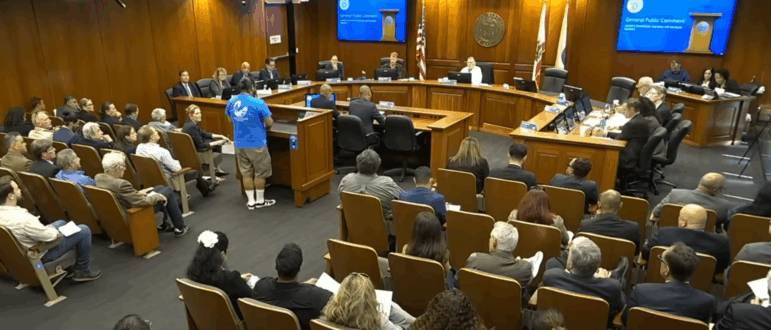
Katz’s proposal is built on the reality that wrenches are already turning on DWP’s water recycling facility expansion. DWP engineers figured out how to design the expansion to produce double the water output initially expected—far more than DWP diverts from Mono Lake. Last October the Commission approved the expansion and discussed linking what Katz calls this “new water” with pausing Mono Lake diversions. There was significant support from many Los Angeles and Eastern Sierra speakers. The project benefits from substantial state funding that reduces ratepayer cost. When complete, it will provide an affordable supply of water at a cost lower than purchasing water from the Colorado River or the Bay Delta.
Pausing DWP diversions would allow more water to flow into Mono Lake, which is artificially and perilously low due to DWP’s many decades of water diversions. Adding more water will cause Mono Lake to finally rise to the healthy level mandated by the State Water Board way back in 1994. Katz points out that once the lake stabilizes at the 6,392-foot level DWP will benefit from the option to divert some water, as long as the protection level is maintained.
Pausing diversions would be good news for recovering the health of Mono Lake—and, as Katz highlights, it serves the interests of Los Angeles too. Healing the damage done at Mono Lake is a requirement of the City’s water rights—so achieving compliance is the best way for the City to retain those rights and be able to access water in the future when the lake is above the required healthy level.
Katz’s theme is that Los Angeles and California can solve problems, meet people’s water needs, and protect the environment all at once—and that DWP is already building the durable projects that make this possible. Mono Lake—and the water issues of the LA Aqueduct up and down the Eastern Sierra and Payahuunadü—do not have to be battles framed in the same old ways as a zero-sum game.
The vision set forth by Richard Katz is both inspirational and realistic. Now, implementation is in the hands of the State Water Board. It is time to act—to raise Mono Lake, affordably meet water needs in Los Angeles, and protect the public trust for the people of California.
Top photo courtesy of Kurt Harrigan.