Nearly 13 years have passed since the Mono Basin Stream Restoration Agreement promised an outlet for the Grant Lake Reservoir Dam to reliably deliver downstream flows to Rush Creek. Today, the wait for a reliable outlet continues.
At the end of 2024, the Los Angeles Department of Water & Power (DWP) confirmed that it was changing its plans for the outlet design to siphons. This change, along with long-deferred maintenance on other critical, aging dam infrastructure means that delivery of the required Stream Ecosystem Flows (SEFs) vital to the restoration of Rush Creek remains severely impaired while the promised solution is, yet again, pushed back even further.
DWP’s alternative plan, now called the Siphons Outlet Project, is replacing the Langemann gates originally studied and planned to reliably deliver SEFs to Rush Creek. According to a DWP report to the California State Water Resources Control Board this past January, the Siphons Project is at 60% design completion and plans have been submitted to the Division of Safety of Dams (DSOD) for approval.
The Siphons Project is one component of a larger, overall Grant Lake Reservoir Dam infrastructure project that is divided into three parts: the Siphons Outlet Project, the Outlet Valve Replacement Project (to replace the damaged and failing rotovalve), and the Spillway Modification Project. The current proposed schedule indicates construction could begin as early as fall 2027 and continue through fall 2035. DWP stated that it was submitting a work plan sequence to DSOD by March 31, 2026.
While regulatory approval from DSOD is necessary, the Mono Lake Committee, California Department of Fish & Wildlife, and California Trout, as well as the State Water Board require more information and assurance that the project will reliably deliver SEFs before the final design phase, bidding, and construction begin. The Committee is pushing for additional information and to resume collaborative meetings with the State Water Board as soon as possible. A DWP spokesperson said, “DWP will be prepared to discuss the work plan with [parties] once we have been provided some feedback from the DSOD on if our work plan sequence will be accepted.”
While 13 years is far beyond the timeframe anyone imagined, moving forward with a new, replacement project that might not reliably deliver SEFs under the original Stream Restoration Agreement and subsequent State Water Board Order is a nonstarter for the long-overdue restoration of Rush Creek.
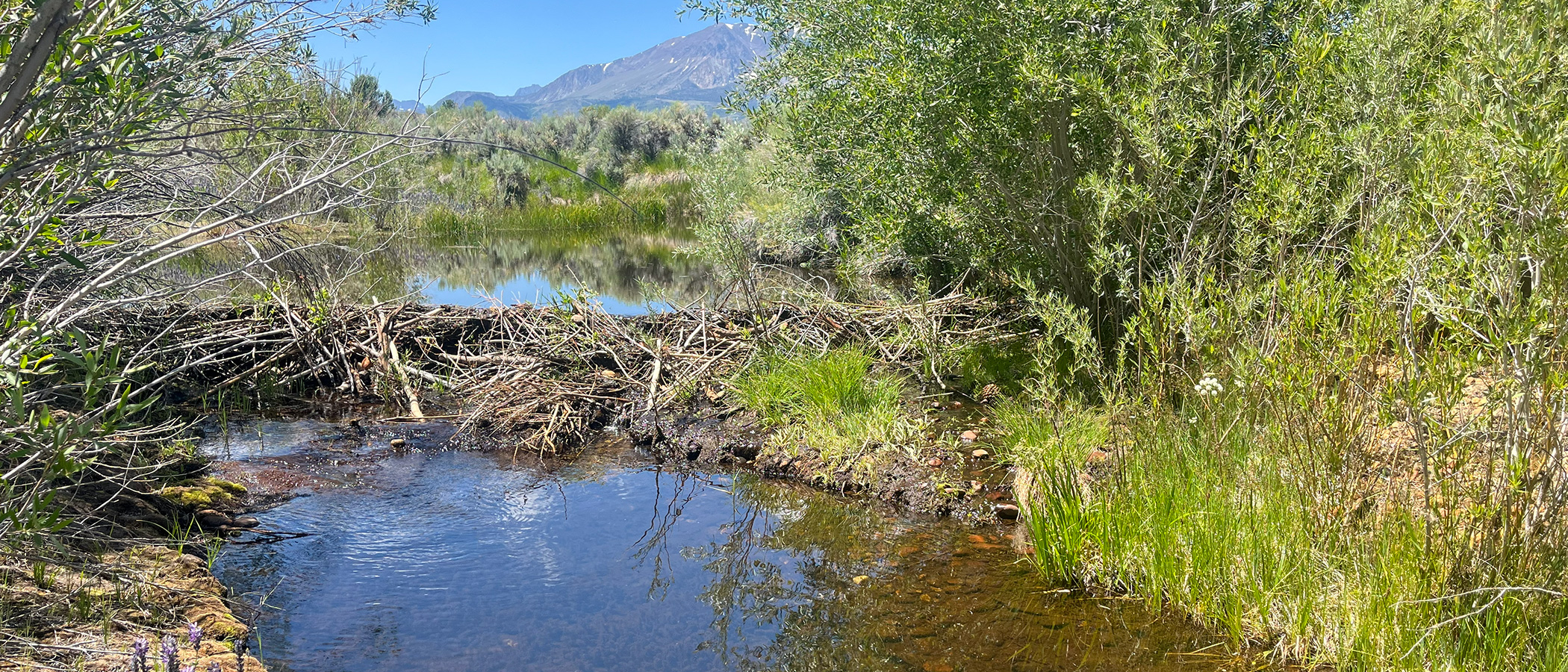
This post was also published as an article in the Winter & Spring 2026 Mono Lake Newsletter. Top photo by Sarah Lampley.