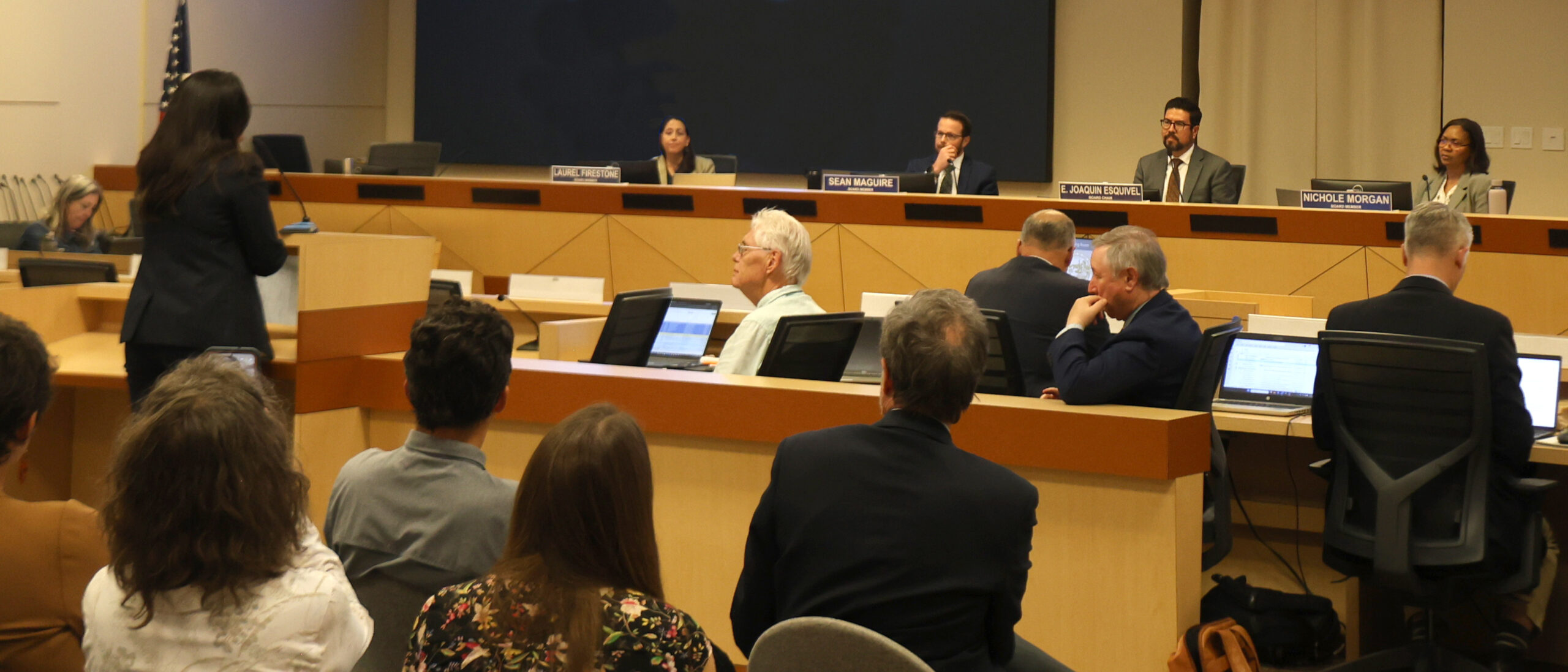
This week the California State Water Resources Control Board focused on Mono Lake’s low level in a five-hour discussion at their regular meeting in Sacramento. A new Mono Lake report and hydrology model from the UCLA Center for Climate Science was the impetus for the agenda item, and there was robust discussion, followed by extensive public comments. At the conclusion, Board members agreed: a formal, decision-making hearing about Los Angeles Department of Water & Power (DWP) water diversions is necessary, this year.
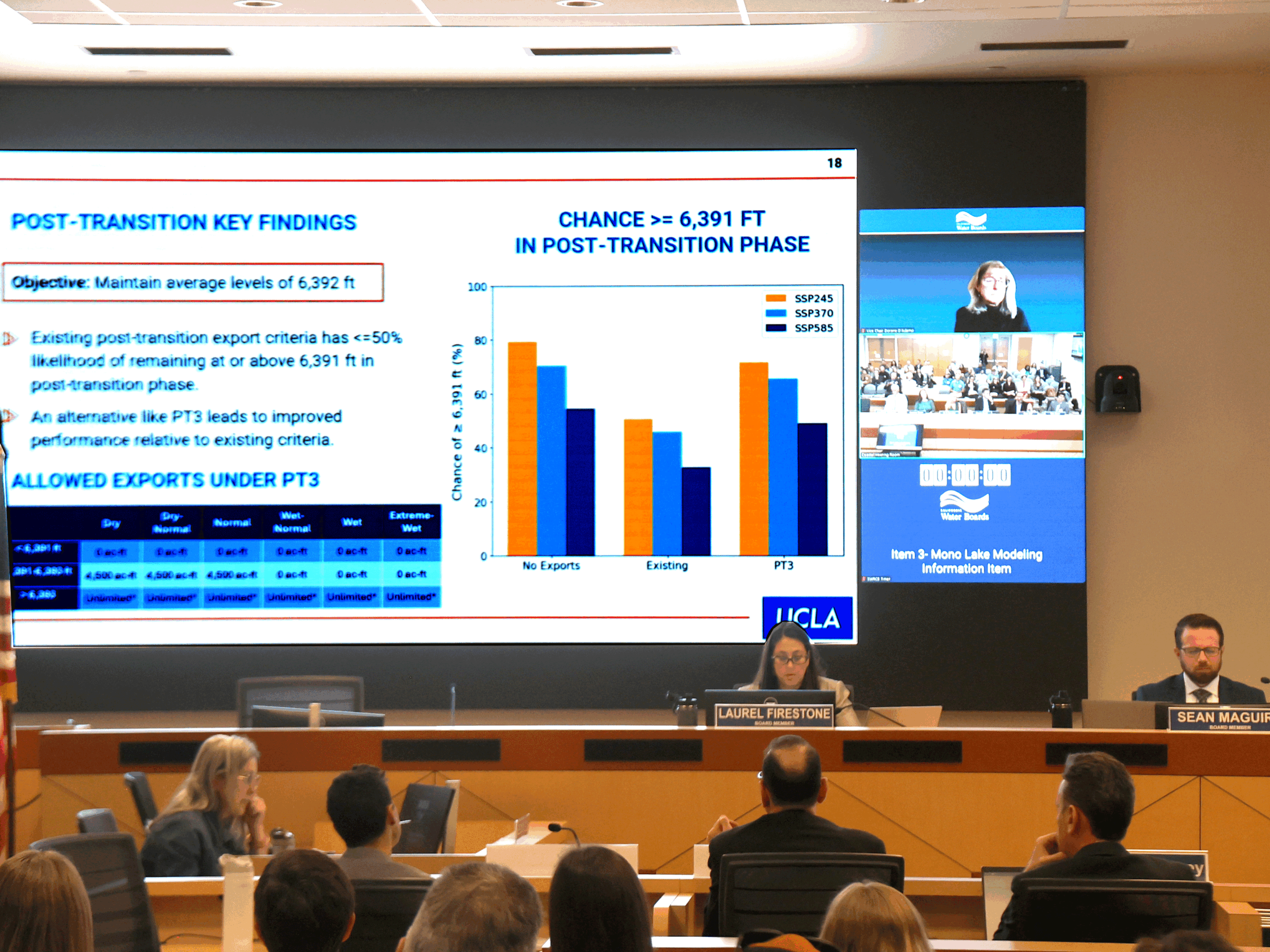
The UCLA team presented a project overview and key findings. The report shows that while climate change is a factor, ongoing DWP water diversions are the main cause of the present-day low lake level. The report also shows that current diversion levels are unlikely to allow the lake to rise. However, Mono Lake recovery is still achievable if water diversions are reduced—a clear opportunity for meaningful action by the Board.
UCLA Mono Lake Model
Project summary: Mono Lake in a Changing Climate
Main report: Development of a Mono Lake Water Level Model and Projections Across the 21st Century
Report Appendix
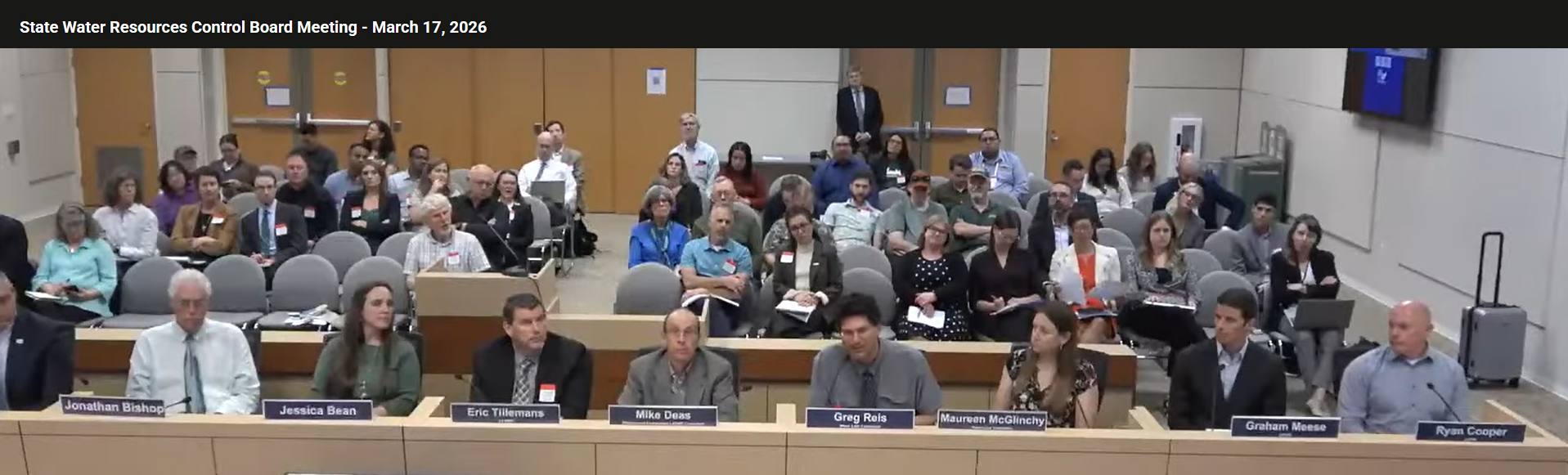
The Board heard 42 public comments from a wide range of interested parties, who, brought technical and scientific expertise, LA community and ratepayer perspective, agency jurisdiction, Tribal perspective, public trust responsibilities, historical context, civic viewpoints, and global concerns—and a call for urgent, solution-oriented action from the Board.
It was a powerful and moving afternoon, and Board members responded.
“I think we should be clear about it. I think we should have a hearing,” said Board member Sean Maguire. “We need a plan for moving forward and working with interested parties and the Tribe,” commented Board member Nichole Morgan. “I think we are long overdue,” said Board member Laurel Firestone.
All five Board members agreed. They directed staff to develop a plan for the necessary preparation steps, with the goal of initiating the decision-making hearing before the end of the year.
A formal hearing is the forum at which the Board can act to reduce LADWP diversion levels in order to ensure Mono Lake rises to the Board’s mandated healthy level.
“It is important that we keep making progress … and prepare ourselves for a hearing that is efficient,” said Board Chair Joaquin Esquivel.
“Mono Lake has a long history of hope,” said Vice Chair Dorene D’Adamo. “This is an opportunity for us to exercise leadership.”
Watch the board discussion from the end of the meeting

Video from the State Water Board’s March 17 meeting
March 17 State Water Board meeting: Presentations
State Water Board staff presentation on Mono Lake background – 4:09:54
UCLA Center for Climate Science presentation – 4:26:49
LADWP presentation on eSTREAM – 5:32:52
Mono Lake Committee presentation on the Vorster Model – 5:48:39
California Department of Fish & Wildlife presentation on the simulation tool – 6:13:37
Mono Lake Kootzaduka’a Tribe – 6:25:50
Public comment
Edie Chang, Deputy Executive Officer at the California Air Resources Board – 6:48:40
Peter Vorster, hydrology and water management consultant for the Mono Lake Committee – 7:03:41
Noah Williams, member of the Bishop Paiute Tribe – 7:10:50
Madi Richards, Policy Manager, California Coastkeeper Alliance – 7:13:20
Bartshe Miller, Eastern Sierra Policy Director, Mono Lake Committee – 7:15:41
Conner Everts, Executive Director, Southern California Watershed Alliance – 7:18:47
David Winkler, 1976 Ecological Study of Mono Lake, California Gull study researcher – 7:22:04
Taylor Broadhead, Audubon California – 7:25:10
Mary Nichols, former Secretary for the Natural Resources Agency (statement read by Martha Davis) – 7:26:52
Brian Schmid, technical consultant to LADWP, Formation Environmental – 7:31:10
Yohannes Yimam, Formation Environmental – 7:35:39
Dr. George Paul, Formation Environmental – 7:39:42
Nancee Murray, Friends of the Inyo – 7:44:02
Geoff McQuilkin, Executive Director, Mono Lake Committee – 7:47:08
State Senator Henry Stern, Senate District 27, statement read by Lauren Garcia – 7:51:02
Redgie Collins, Vice President of Legal and Government Affairs, California Trout – 7:52:55
Richard Roos-Collins, outside council, California Trout – 7:56:16
Martha Guzman Aceves, former Regional Administrator for the Environmental Protection Agency – 8:00:11
Rose Reis-Jackson, Mono Lake Committee member – 8:03:07
Ruth Galanter, LA City Council 1987-2003 – 8:04:58
Mono Lake Volunteers – 8:07:23
Erin Ryan, Associate Dean for environmental programs at Florida State University Law School – 8:20:55
Maura Monagan, LA Waterkeeper Policy & Government Affairs Manager – 8:25:33
mark! Lopez,- East Side Community Organizer with East Yard Communities for Environmental Justice – 8:27:56
Clare Letmon, Policy Director, Los Angeles Business Council – 8:32:05
Tapash Das, technical consultant for LADWP, Jacobs Engineering – 8:34:10
Mark Gold, 8:38:43
Santeena Pugliese, partner with the Owens Valley Indian Water Commission – 8:45:00
Melanie Paola Torres, organizer with Pacoima Beautiful – 8:50:42
David Schram, Silicon Valley Barcode of Life – 8:57:24
Caty Wagner, Campaign Manager, Sierra Club California – 9:00:13
Arturo Garcia, Associate Director of Local Government Relations, Nature Conservancy – 9:04:55
Scott Stine, expert witness for 1994 State Water Board D1631 – 9:12:25
Board discussion
Board discussion – 9:19:57
UCLA Mono Lake Model
Project summary: Mono Lake in a Changing Climate
Main report: Development of a Mono Lake Water Level Model and Projections Across the 21st Century
Report Appendix
Top photo by Geoff McQuilkin.