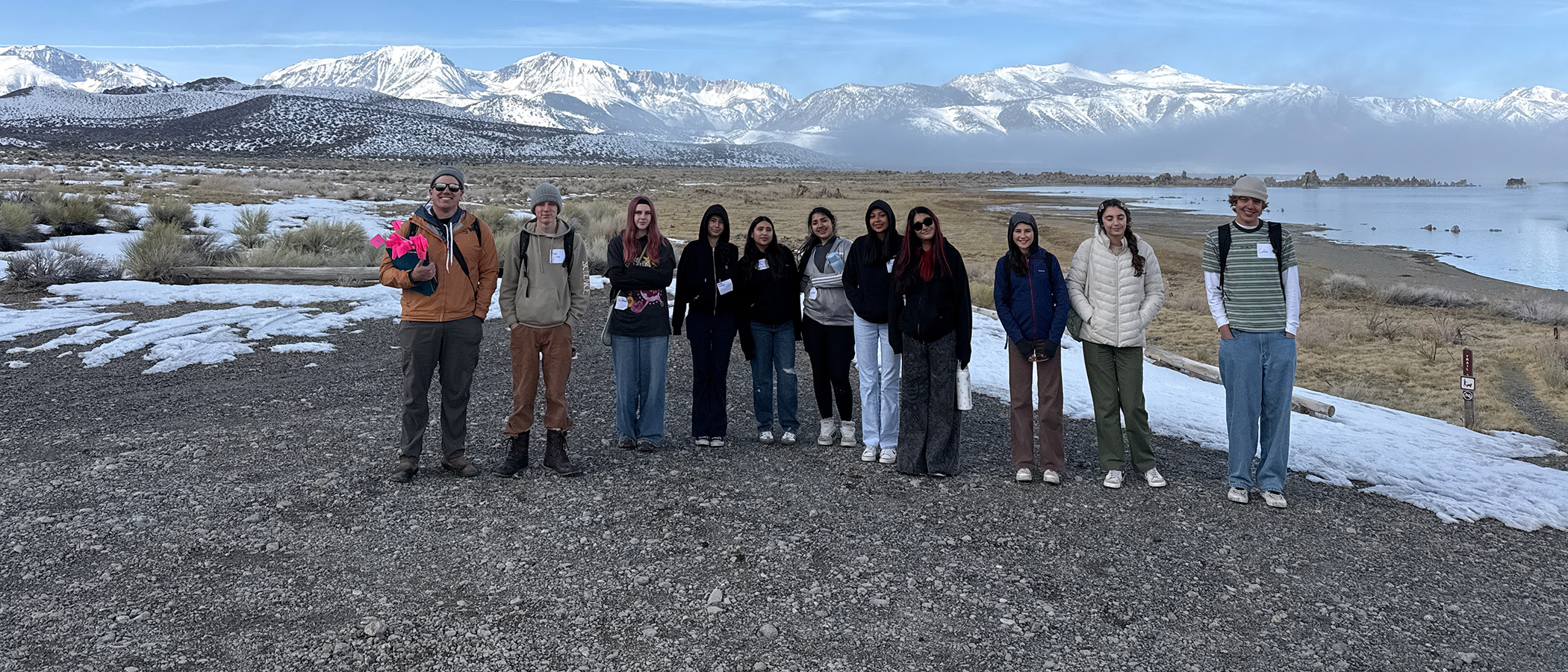
On Sunday, February 1, Eastern Sierra students from two counties participated in the Experience Ambientalia program for World Wetlands Day. In partnership with the Mono Lake Committee, local high school teachers, and our colleagues at Laguna Mar Chiquita in northern Argentina, these students took a tour of local wetlands and learned about the ecological importance of wetlands in the Mono Basin.
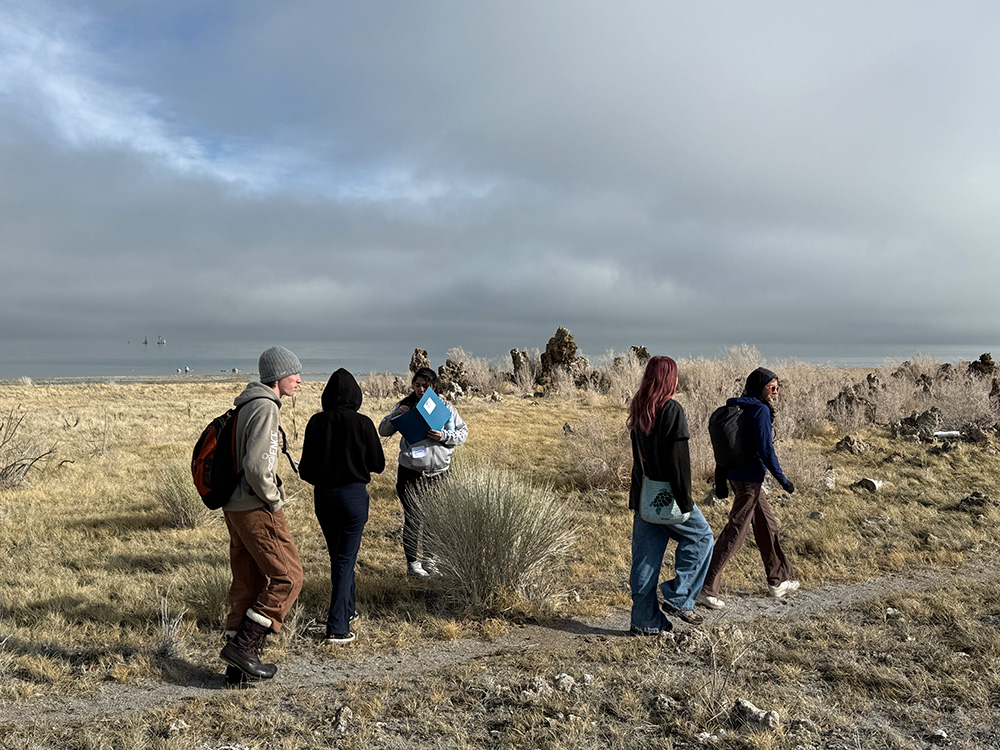
Students began the day by heading to Navy Beach to see freshwater springs bubbling up and discussed their importance in providing the right conditions for wetland ecosystems to exist. From there, we discussed the biodiversity that can be found within a wetland and how important wetland ecosystems are to native birds during the nesting season.
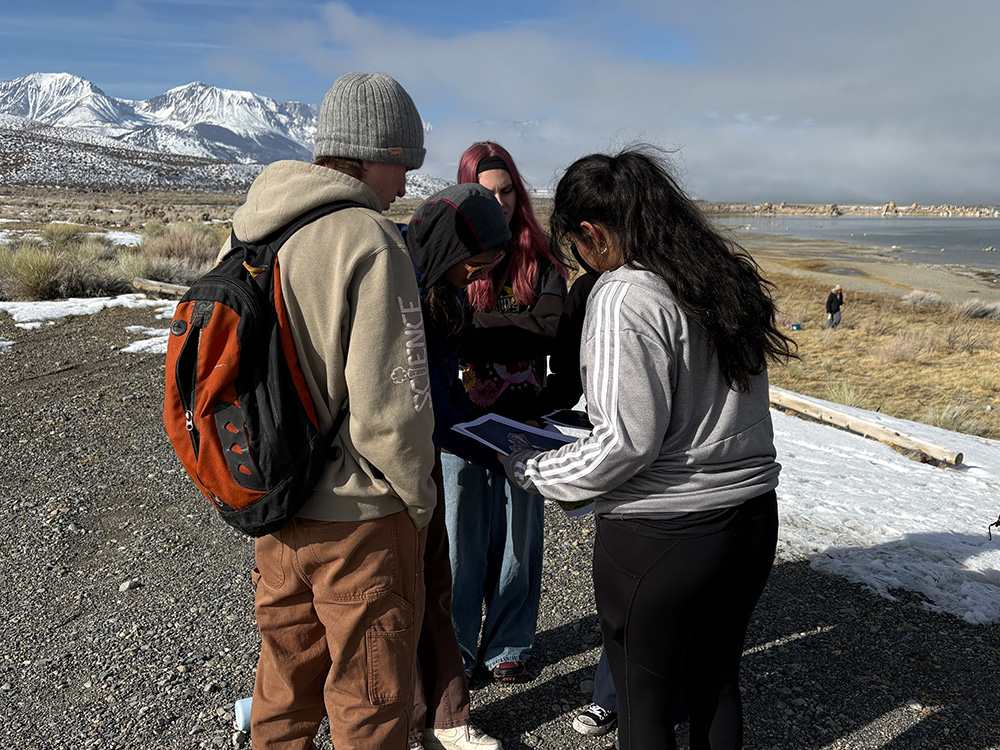
After learning about wetlands, the students were then tasked with “building” a wetland ecosystem from the ground up. Inspired by the card game Ecologies, which challenges players to assemble functioning ecosystems based on species interactions, students needed to find “species” cards that were hidden around Navy Beach, compile them, and order them into trophic niches according to the functional role of the species within the larger food web. The base layer of the ecosystem highlighted hydric soil and freshwater springs to create the necessary conditions of a wetland. The layer above that highlighted common plants found in wetlands, like cattails, common tules, and willows. The layer above that comprised insects and mammals that feast upon the vegetation, and the tier above that highlighted birds and mammals that feed on these primary consumers, and so on.
After successfully building their wetland ecosystems, students were then given ecological threats to wetlands in the form of invasive species. The students then needed to determine how the ecosystem changed and what the impacts would be on the native species and the food web’s composition. After this activity we ended the day by discussing how we, as humans, are part of the ecosystem and have the opportunity—and should feel empowered—to restore our wetland habitats, as well as saline lakes.
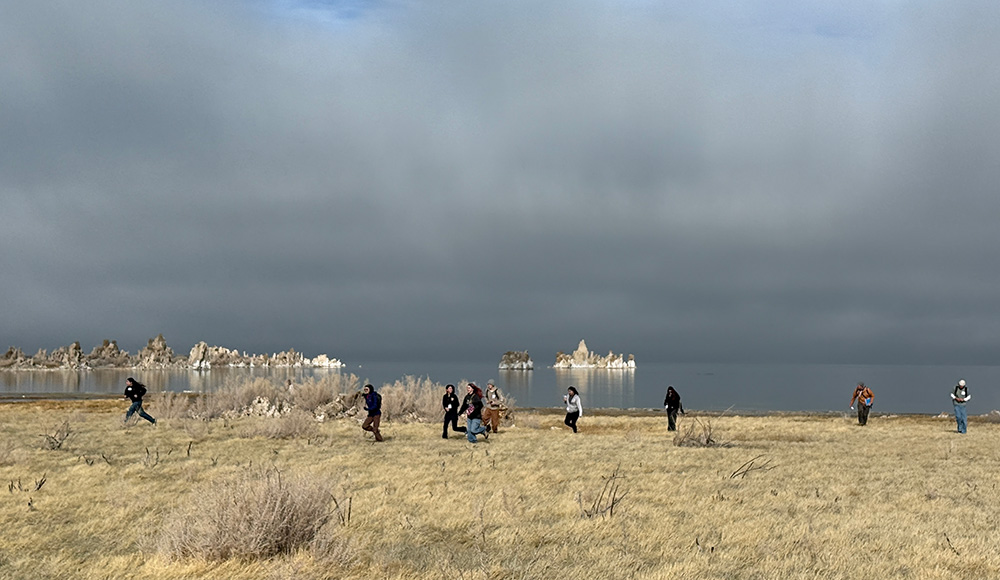
Students from both hemispheres are now carrying out parallel environmental stewardship and education projects at their respective lakes. Our peers in Argentina will convene on February 16 to celebrate World Wetlands Day. Next month, our students will be celebrating March Mammal Madness by learning about mammals found in the Mono Basin.
About the Experience Ambientalia program
Experience Ambientalia is a community group that connects young people to their home ecosystems, introduces them to sister saline lakes across the Western Hemisphere, and encourages environmental stewardship. It was launched in 2021 by Fundación Líderes de Ansenuza, Manomet Conservation Sciences, and the Western Hemispheric Shorebird Reserve Network at Laguna Mar Chiquita in the Cordoba Province of Argentina. The program came to Mono Lake in 2022 because Laguna Mar Chiquita and Mono Lake are sister lakes that provide critical habitats for Wilson’s Phalaropes, a migratory shorebird that is at risk due to the declining health of saline lakes worldwide.
Top photo courtesy of Sarah Taylor.