With the Los Angeles mayoral candidate’s race between Karen Bass (incumbent) and Nithya Raman running at full tilt, Angelenos are asking important questions on a wide range of topics, including Mono Lake.
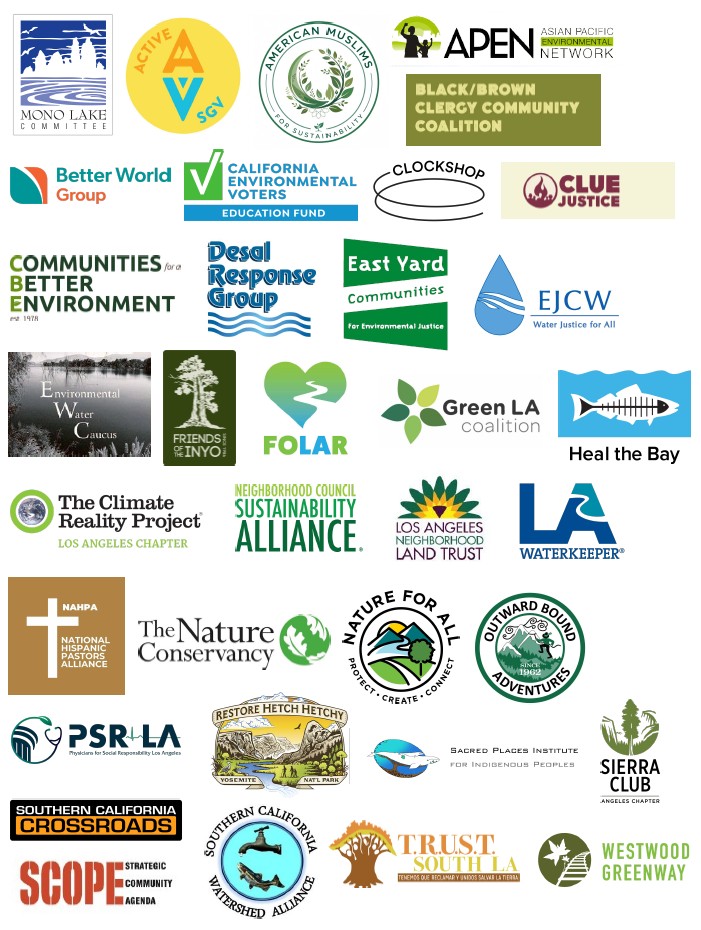
In letters to both candidates, a coalition of 39 community organizations made the case for Los Angeles to pause its Mono Basin water diversions until Mono Lake recovers to the state-mandated 6,392-foot level, a step the coalition argues is affordable, achievable with the city’s growing local water supply, and consistent with LA’s 1994 commitment to the State Water Board.
You can read the full letter below or as a pdf of the letter to Mayor Karen Bass and a pdf of the letter to Nithya Raman.
Our coalition supports a healthy Mono Lake and a resilient Los Angeles. At the recent mayoral candidate forum you observed that LA’s significant progress toward achieving 70% local water supply gives the city capacity to heal damage caused by Los Angeles Aqueduct water extraction from Mono Lake and the Owens Valley.
We agree with you, and with a formal State Water Resources Control Board hearing rapidly approaching regarding the low, damaging level of Mono Lake, we ask you to take the next step. We call upon you to establish and communicate a position stating that the City of Los Angeles stands ready to pause LADWP Mono Basin water diversions until the lake recovers to the state mandated level of 6,392 feet above sea level.
Tens of thousands of acre feet of new local water are coming online as local supply for the City. Pausing Mono Basin diversions is a simple and effective policy that is very doable for Los Angeles, especially with a wet El Niño winter ahead and the additional 48,000 acre-feet per year of new groundwater supplies that will be produced by the recently completed North Hollywood Central and North Hollywood West Groundwater Treatment Facilities. This policy advances the concept set forth by LADWP Commission past President Richard Katz earlier this year. This approach fulfills the city’s environmental obligations in the lowest cost manner, is fiscally responsible for ratepayers, avoids protracted and costly LADWP litigation, and enables future access to Mono Basin water once the health of Mono Lake has been restored.
Take Action Now to Protect Mono Lake
Now is the time to leverage our ability in Los Angeles to reduce reliance on imported and extracted water and to protect Mono Lake. By investing in local and climate resilient water supplies, Los Angeles today is able to adjust its diversion practices from the Eastern Sierra in a manner that is more environmentally and fiscally sustainable for Angelenos and Mono Lake.
Invest in Local and Resilient Water in Los Angeles
As outlined in the Los Angeles Department of Water and Power’s (LADWP) 2025 Urban Water Management Plan, Los Angeles is making important progress towards achieving the City’s goal of 70% locally sourced water, significantly improved water efficiency, increased stormwater replenishment of local groundwater, expanded recycled water supplies, restored access to local groundwater, and water service distribution reliability improvements. Projects such as Pure Water, the Safe Clean Water Program, and the advanced water purification facilities at Tillman and Hyperion are all major investments for the reliability and health of our water systems.
However, in the midst of a climate crisis, local water supplies and resilience are becoming even more important and urgent as imported water supplies are becoming more vulnerable to climate impacts and interruption. Los Angeles needs to increase investments in local water resilience to benefit our communities and protect the Eastern Sierras both now and in the future. We encourage you to work with the Los Angeles City Council to invest in and implement local water initiatives. This is outlined in Mayor Bass’ Climate Plan for Los Angeles:
Since 2000, Los Angeles has experienced more frequent and prolonged droughts. Projections show droughts will become more common, longer, and more severe due to hotter temperatures and shifts in seasonal rainfall. Historical droughts are projected to become about 15% more severe by mid-century. These changes threaten water supplies, groundwater recharge, urban trees, and landscape irrigation, while also increasing fire risk and pressure on household water bills. Los Angeles imports a large portion of its water supply from the Sierra Nevadas, the Colorado River, and Northern California. In dry years, imported water availability is projected to decline by approximately 7% by mid-century and 13% by the end of the century under current conditions. As drought intensifies, Los Angeles will face increased pressure on local water management systems, requiring more conservation strategies and storage capacity.
LADWP has stated that it anticipates that climate change will cause a 0.19% decline annually in Los Angeles Aqueduct (LAA supplies) from the Eastern Sierra, including Mono Lake, under dry year conditions. The Agency’s modeling also shows considerable climate-driven variability in these supplies, which along with other challenges like seismic activity, make LAA water supplies riskier and less reliable in coming years. It is critical to reduce reliance on imported water to ensure reliability. However, despite progress on local water systems, LADWP’s current water management strategy is to maximize its LAA diversions at all times. This has caused significant adverse environmental, Tribal, and community impacts in the Eastern Sierra.
An alternative approach is to use the flexibility that LADWP is gaining from the diversification and expansion of its local water supply sources to invest in improved watershed management, resilience, and ecosystem health in the Eastern Sierra. Former LADWP Commissioner Richard Katz has asserted that, for example, the City’s recent landmark engineering achievement to double the treatment capacity of the Tillman Water Reclamation Plant to 45 million gallons per day (MGD) provides a unique opportunity to supplement the City’s water supply and restore Mono Lake while protecting Los Angeles’ water rights interests.
Raising Mono Lake to its 6,392-foot protection level and restoring local springs and native vegetation in Owens Valley means that these ecosystems will be in a healthier condition and will have fewer environmental constraints that can impede sharing water with Los Angeles during drought years. This strategy also aligns with Los Angeles’ policies to protect and improve biodiversity and to implement nature-based solutions. Our commitment to these policies should be implemented on both ends of LAA, not just within the City’s boundary. This strategy also helps to protect Los Angeles ratepayers from service disruptions that may be caused by fires, flooding or other natural catastrophes that could interrupt water diversions from the Eastern Sierra. This aligns with growing ratepayer sentiment that diversions from the Eastern Sierra need to be reduced.
Notably, diversions are unreasonable and unnecessary in wet years, such as the forecasted super El Niño winter ahead, that bring the region an overabundance of water.
Prioritize Affordability for Angelenos
Making the decision to protect Mono Lake supports water affordability for Los Angeles residents. LADWP obtains only about 1-3% of its annual supply from Mono Basin stream diversions. Thus, the rate impact of a pause in diversions will be about $1 per month for a duration of thirty to forty years while Los Angeles integrates local solutions as a replacement. This cost is very low when compared with alternative scenarios, including long legal battles in State Water and Resources Control Board (SWRCB) hearings or additional legal actions and mitigation projects for the environmental impacts of the inadequate lake level. For example, dust pollution caused by over three square miles of the exposed Mono lakebed must be abated, as it is emitting PM10 pollution at a concentration that exceeds federal standards. The most feasible mitigation measure for this is to cover the exposed lakebed with gravel, which would be highly costly due to Mono Lake’s unique geography and soil; maintaining this gravel layer is estimated to cost ratepayers about $2.38 per month for an indefinite amount of time. The most cost-effective solution to undo the damage created by LADWP diversions and prevent further environmental impacts from Mono Lake is nature-based: allow the lake level to rise to the mandated sustainable lake elevation of 6,392 feet by pausing LADWP’s practice of maximizing annual water diversions.
Compliance with the state-mandated lake level preserves LADWP’s water rights and maintains the ability to petition for temporary diversions in the case of emergency or drought. This option can only be guaranteed if LADWP takes action to protect the health of Mono Lake and assure a baseline amount of water (5,000 acre-feet of Mono Basin groundwater annually).
Uphold the California State Water Resources Control Board Decision
In 1994, the City of Los Angeles made a historic promise to the people of California: Los Angeles agreed to accept the State Water Board’s requirement that Mono Lake must rise to the protection level of 6,392 feet above sea level, restoring Mono Lake’s health, its tributary streams, and its internationally significant ecological, cultural, scenic, wildlife, and recreation resources. City of Los Angeles leaders stood in the State Capitol with the Mono Lake Committee and many stakeholders, including state and federal agencies, to confirm their joint commitment to support the implementation of the SWRCB Mono Lake decision. This landmark agreement put an end to decades of costly litigation. It recognized the permanent connection of the Mono Basin with the people of Los Angeles, from the south and east to the coast, and how the future wellbeing of both are forever linked. It was and remains an historic and precedent setting agreement, demonstrating collaborative leadership to achieve a solution to saving such an incredible natural resource.
Today, Mono Lake has only made it halfway to the mandated management level, putting the lake’s recovery a decade behind schedule and causing ongoing ecological, wildlife, economic, Tribal, and air quality harms. In February 2023, the State Water Board held a workshop to consider the problem of Mono Lake’s chronically low level and in response, contracted the UCLA Center for Climate Science to develop a hydrological model for the Mono Basin that incorporates current understanding of climate change in California. The scientists who developed the report are leaders in global and California climate modeling.
Model development and reporting spanned three years, and the UCLA scientists consulted experts at the Mono Lake Committee and DWP throughout the development process.
The report was released in March of this year and presented three significant conclusions including: 1) ongoing DWP water diversions are the major cause of the present-day low lake level; 2) current diversion criteria are unlikely to allow the lake to rise to the 6,392-foot Public Trust lake level; and 3) Mono Lake recovery is still achievable, even with climate change, if diversions are reduced.
The UCLA model analysis contrasted the impact of the last 30 years of climate change with the nearly 400,000 acre-feet of stream water diversions exported from the Mono Basin during this period to investigate why Mono Lake has been slow to recover since the 1994 decision. Results indicate that since 1994, diversions have had a 50% greater impact on the state of the lake than changes in climate. This remains true for future climate scenarios; the UCLA model also utilized 33 future climate projections to model Mono Lake rise over the coming decades. Under the current diversion rules, less than 40% of model runs reach 6,392 feet within 40 years. This result aligns with the observed lake level fluctuations over the past 30 years; lake level rise has stalled below 6,385 feet under the current diversion rules, with no net rise since 1999.
Encouragingly, the percentage of successful model runs doubles when LADWP diversions are paused. This implies that Los Angeles has a significant opportunity to take an important step forward in fulfilling the City’s promise to Mono Lake and upholding Public Trust values.
We appreciate your leadership and look forward to working together to achieve a shared sustainable water future for Los Angeles and Mono Lake.
Thank you for your time and consideration.
Sincerely,
Geoffrey McQuilkin
Executive Director, Mono Lake Committee
Wesley Reutimann
Deputy Director, Active SGV
Mahomed Khan
Director, American Muslims for Sustainability
Seng So
Los Angeles Organizing Director, APEN
Cecilia Estolano
CEO, Better World Group
Walter Contreras
Black and Brown Coalition
Renna Hickey
California Environmental Voters
Sue Bell Yank
Clockshop
Jamie Contreras
CLUE (Clergy and Laity for United Economic Justice)
Roberto Cabrales
SoCal Program Co-Director-Wilmington, Communities for a Better Environment
Gabriel Gutierrez, PhD.
Professor and Chair, Department of Chicano/a Studies, CSUN
Siobhan Dolan
Desal Response Group
mark! Lopez
Eastside Community Organizer & Special Projects Coordinator, East Yard Communities for Environmental Justice
Andrea Leon-Grossmann
Board Member, Environmental Justice Coalition for Water
Conner Everts
Environmental Water Caucus
Wendy Schneider
Executive Director, Friends of the Inyo
Candice Dickens-Russell
Friends of the Los Angeles River
Alexia Skrbic
GreenLA
Tracy Quinn
CEO, Heal the Bay
Charles Miller
Chair, Los Angeles Climate Reality Project
Pastor Eddie Justice Jones Jr.
The Los Angeles Civil Rights Association
Lisa Hart
Executive Director, Los Angeles Neighborhood Council Sustainability Alliance
Tori Kjer
Executive Director, Los Angeles Neighborhood Land Trust
Maura Monagan
Policy & Government Affairs Manager, Los Angeles Waterkeeper
Walter Contreras
Southern California Director, NAHPA (National Hispanic Pastors Alliance)
Arturo Garcia
Director of Local Government Relations, The Nature Conservancy
Belén Bernal
Executive Director, Nature for All
Charles Thomas
Executive Director, Outward Bound Adventures
Michael Rincon
Research and Policy Manager, Physicians for Social Responsibility – Los Angeles
Spreck Rosekrans
Executive Director, Restore Hetch Hetchy
Angela Mooney D’Arcy
Sacred Places Institute for Indigenous Peoples
Charming Evelyn
Sierra Club Angeles Chapter
Miriam Sayes
Environmental Resource Specialist, Southern California Crossroads
Conner Everts
Southern California Watershed Alliance
Tanya Borja
EJ Policy Associate, Strategic Concepts in Organizing and Policy Education: SCOPE
Vanesa Iniguez
Director of Climate Initiatives, T.R.U.S.T. South LA
Charles Miller
President, Westwood Greenway, Inc.
Amanda Begley
Shona Calzada Ganguly
City of Los Angeles Resident, Neighborhood of Shadow Hills
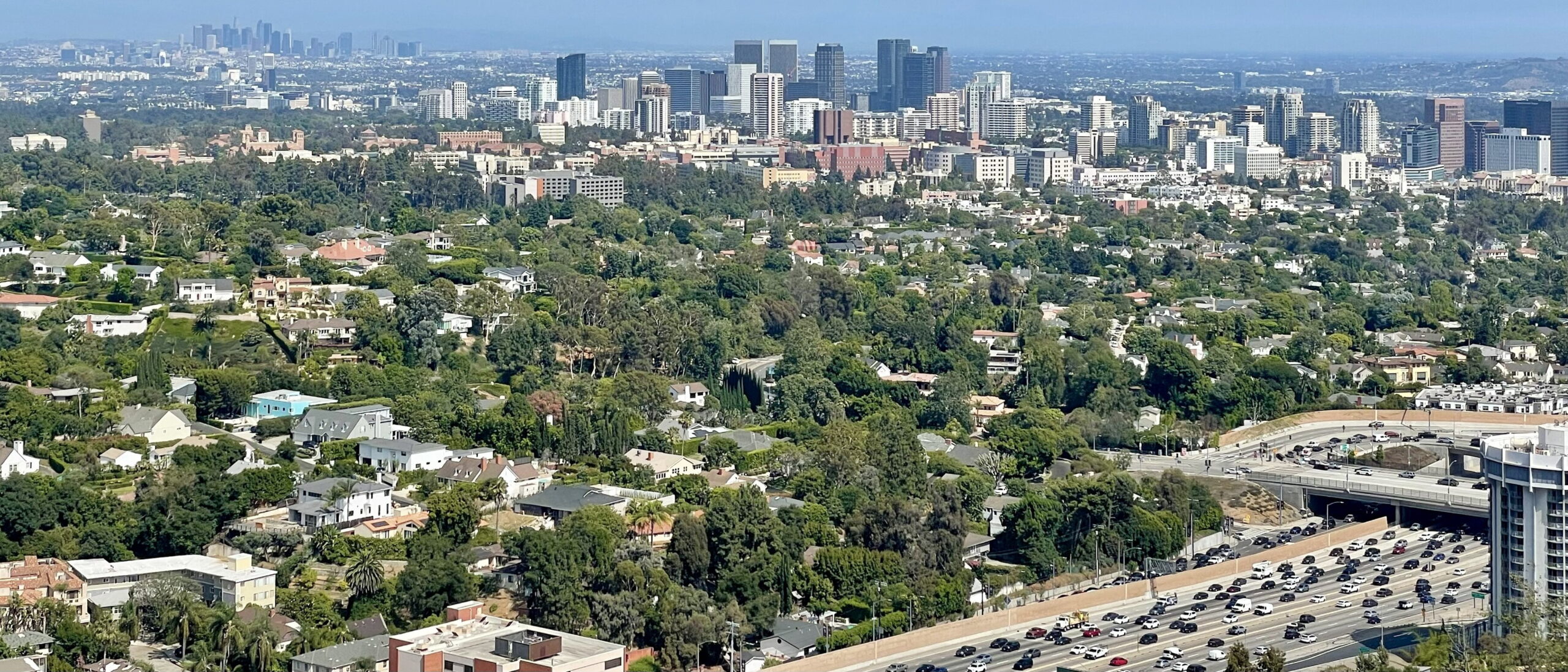
Top photo: Los Angeles Skyline, Wikimedia Commons
