This post was written by Caelen McQuilkin, Project Specialist, and Teri Tracy, Eastern Sierra Policy Coordinator.
Stormwater capture and recycled water projects supply LA but Mono’s only source of water still diverted
“Roller coaster” and “whiplash” metaphors have dominated articles about California water and weather in recent months, but other elements of the water landscape are also noteworthy.
In Los Angeles, investments in local water supply resilience have been delivering strong returns. By focusing on increasing stormwater capture capability to recharge groundwater basins, the Los Angeles Department of Water & Power (DWP) was able to capitalize on heavy precipitation in the late fall and winter months. Between October 1, 2025, and mid-January, 56,000 acre-feet of stormwater were captured. By late February, stormwater capture exceeded 80,000 acre-feet. In other words, this past winter DWP captured five times the amount of water it diverts from Mono Basin streams from Los Angeles stormwater alone.
Since implementing the Stormwater Capture Master Plan in 2015, DWP has significantly expanded its stormwater capture programs, with plans to increase capacity to 150,000 acre-feet by 2035. In future wet years when that capacity can be maximized, stormwater capture alone will exceed Mono Basin stream diversions nine times over. DWP is also working to increase recycled water capacity, such as the expansion of the Tillman Water Reclamation Plant that is expected to supplement the city’s water supply with 40,000 acre-feet of new water by 2027.
By mid-March of this year, concerns about unusually warm temperatures and rapid snowpack melt were a hot topic. But before that, the winter months brought California plenty of water. Back in January, a DWP spokesperson called the state’s drought-free conditions at the time “quite outstanding,” and the Los Angeles Board of Water & Power Commissioners described the status as “unbelievable.” Indeed, it had been 25 years since the last time there were no areas of drought in the state.
In February, DWP staff told the Commissioners that water conditions over the last three years “take the pressure off water supply.” As of late March, all major supply reservoirs in California sit at or above their historical averages. In Southern California, all major reservoirs remain at full capacity or above their historical average. For example, the Diamond Valley Reservoir, the biggest in Southern California, currently sits at 129% of its historical average. The drought-free good news has continued for California; while a few areas have recently appeared as “abnormally dry,” meaning they might move into drought conditions, the state is still drought-free at the moment.
Elements of water conditions and supply are a source of constant analysis and conversation, but DWP’s Mono Basin operations reflect indifference. If DWP had not exported water, Mono Lake would have held its gains this year. While DWP claims to prioritize “the environment and the watershed in the Mono Basin first before a single drop reaches the City of Los Angeles,” the Department’s strategy this year, and every year, is to “always try to maximize aqueduct deliveries to the city,” as DWP officials told CalMatters last year. And that maximization always happens at the expense of Mono Lake.
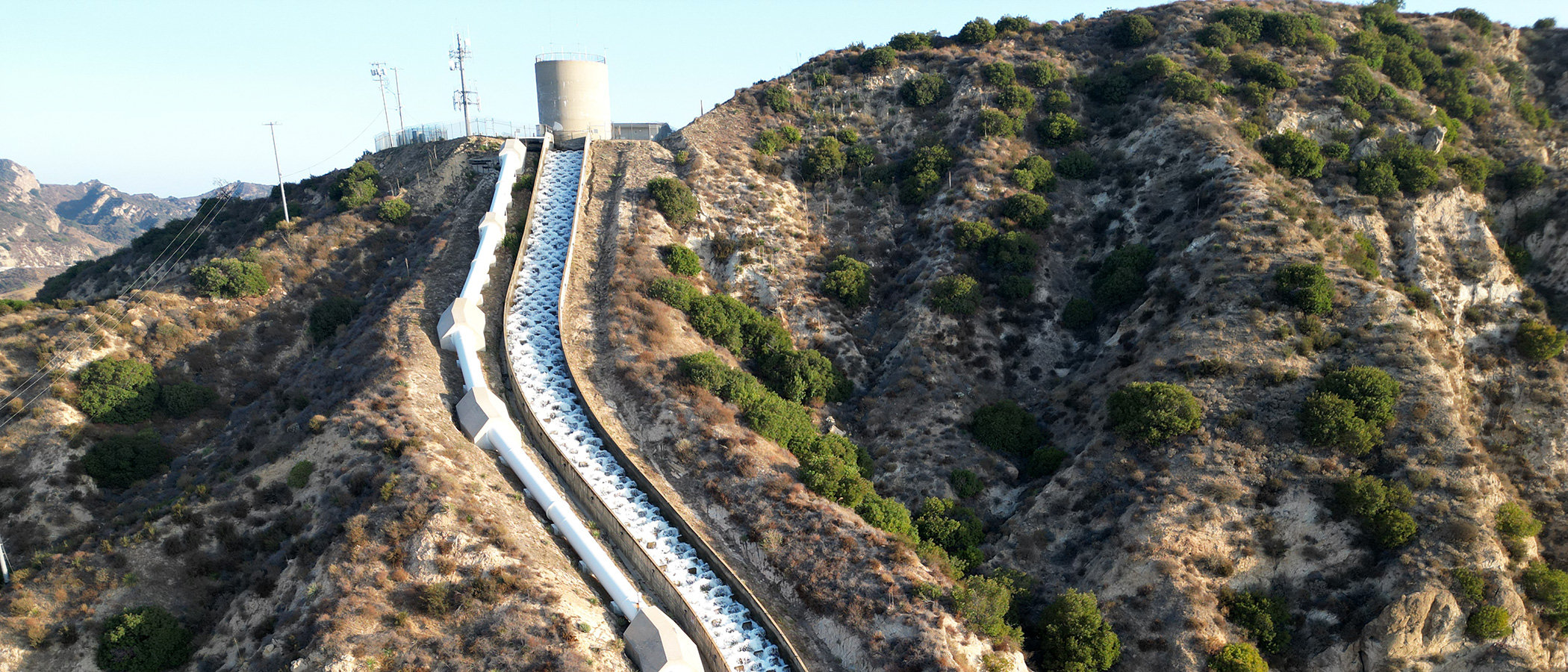
This post was also published as an article in the Winter & Spring 2026 Mono Lake Newsletter. Top photo by Geoff McQuilkin: Eastern Sierra water flows down the Sylmar Cascades into the LA Basin. Despite plentiful stormwater capture in LA this past winter, as well as promising recycled water projects underway, DWP took its whole allotment of Mono Basin water again this year.