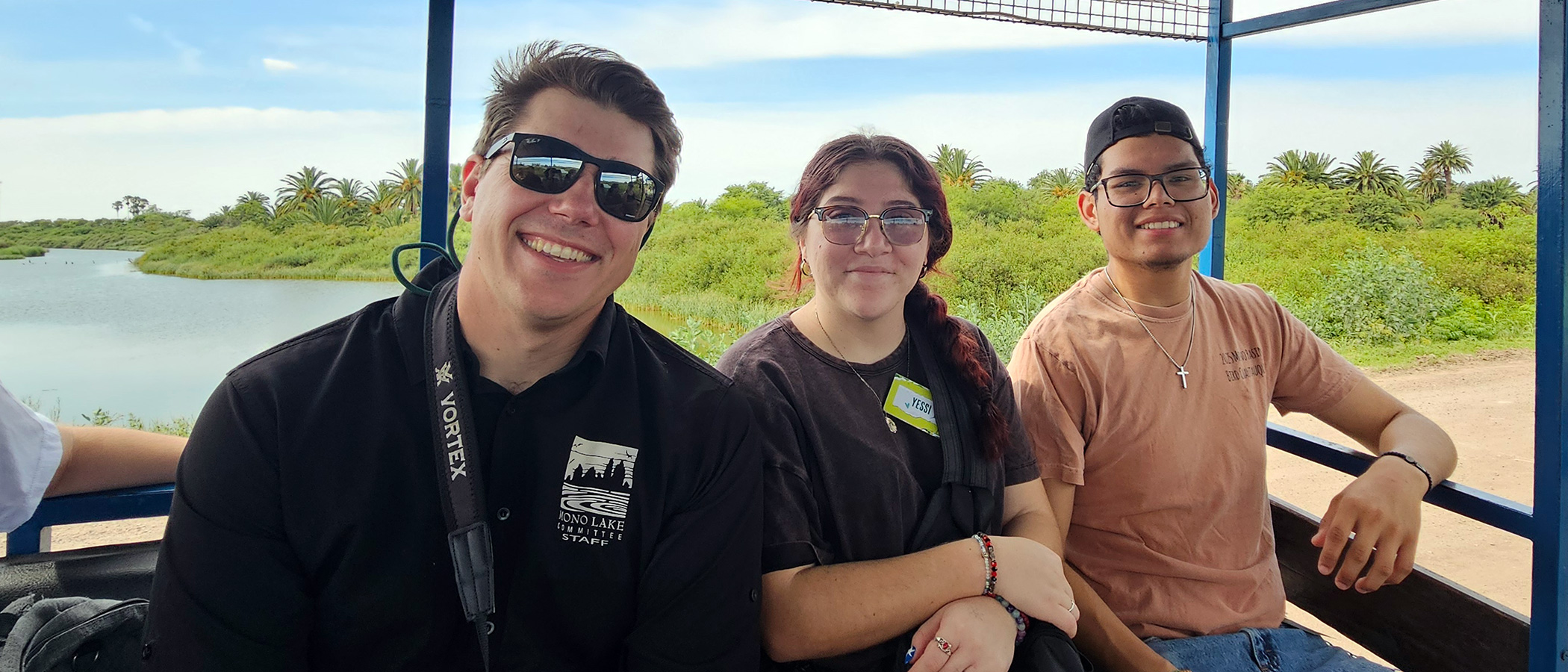
Experience Ambientalia has had a great start to its third year, with students on both sides of the hemisphere—at Mono Lake and Laguna Mar Chiquita, Argentina—participating in coordinated monthly environmental education and stewardship activities and the program’s leadership gathering in Argentina.
Local environmental education
Between September 2025 and now, the local Ambientalia chapter has learned about the Mono Basin through monthly activities. For Coastal Clean-Up Day, the students did a canoe tour followed by a trash pick-up along the South Tufa shoreline. The next month, they participated in a bird banding demonstration with local biologist Katie Smith, who taught students how to properly handle birds, and about how birds migrate and nest throughout the Pacific Flyway.
On World Fisheries Day, students learned about the history and ecological importance of fish in the Mono Basin watershed while practicing ethical fi shing techniques in local streams with guide and Beaver’s Sporting Goods owner Brad Beaver and Aaron Sturtevant of the California Department of Fish & Wildlife (CDFW). On World Wetlands Day, students “built” a wetland ecosystem using an activity inspired by the card game Ecologies, searching for hidden species cards around Navy Beach and working together to organize the cards into trophic niches based on their role in the food web. Students most recently took part in a wildlife tracking workshop with CDFW biologist Phil Johnston.
Environmental Leaders Forum
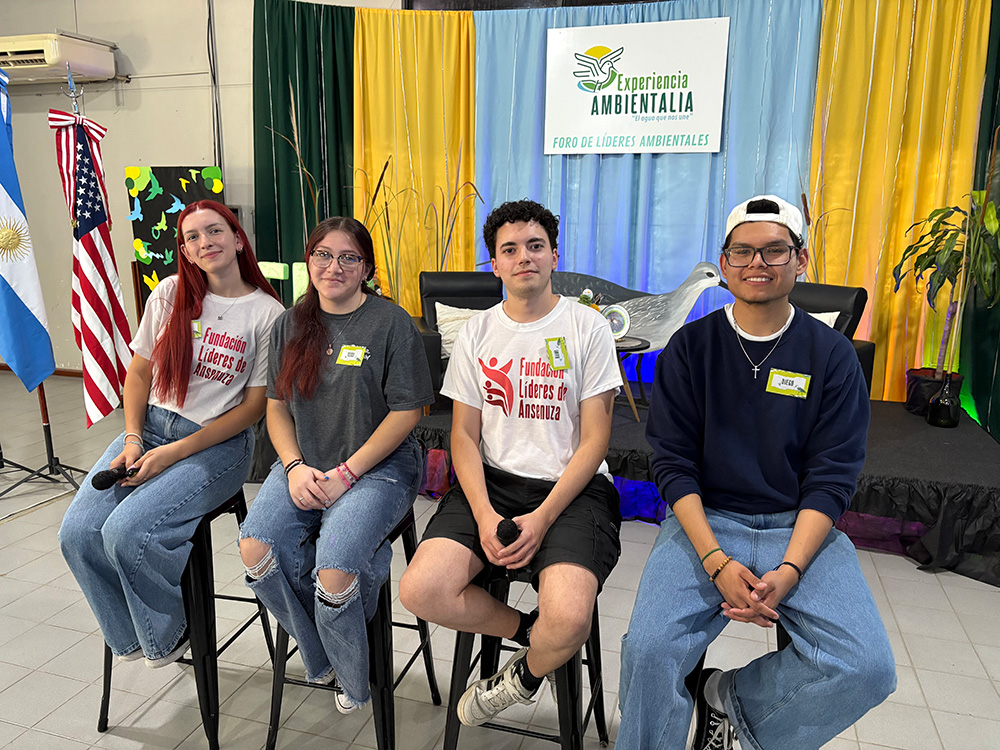
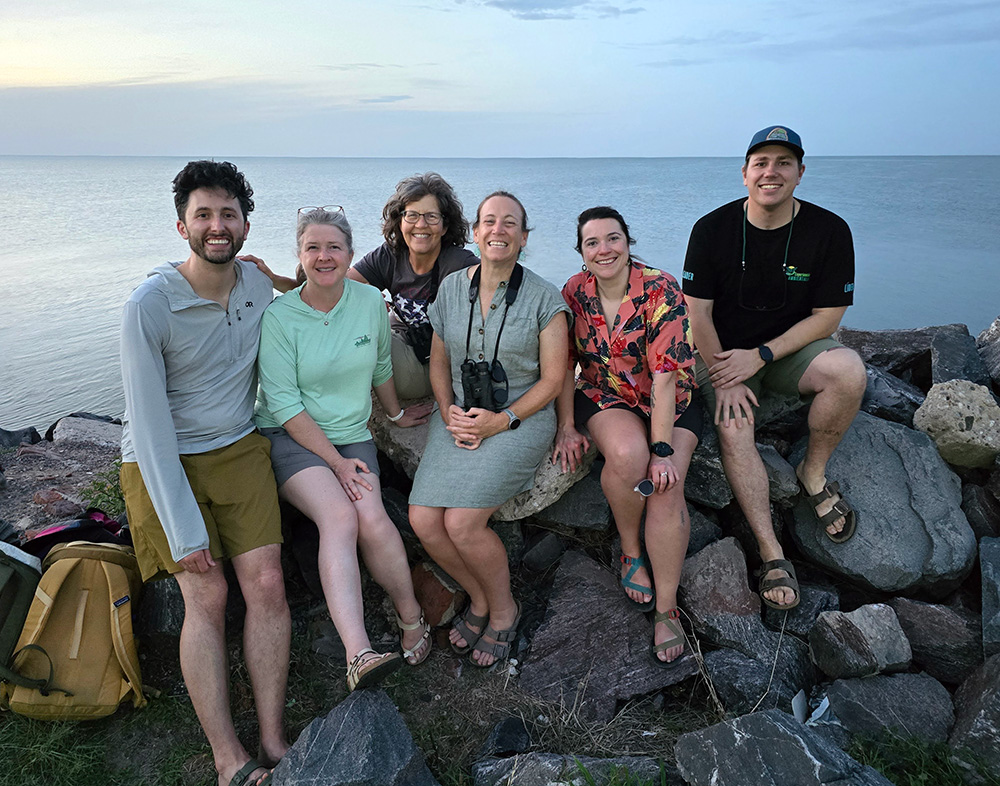
In December, Ambientalia alumni Yessenia Martínez and Diego Murguia, and Mono Lake Committee staff, traveled to Laguna Mar Chiquita to participate in an Environmental Leaders Forum hosted by our Argentinian colleagues.
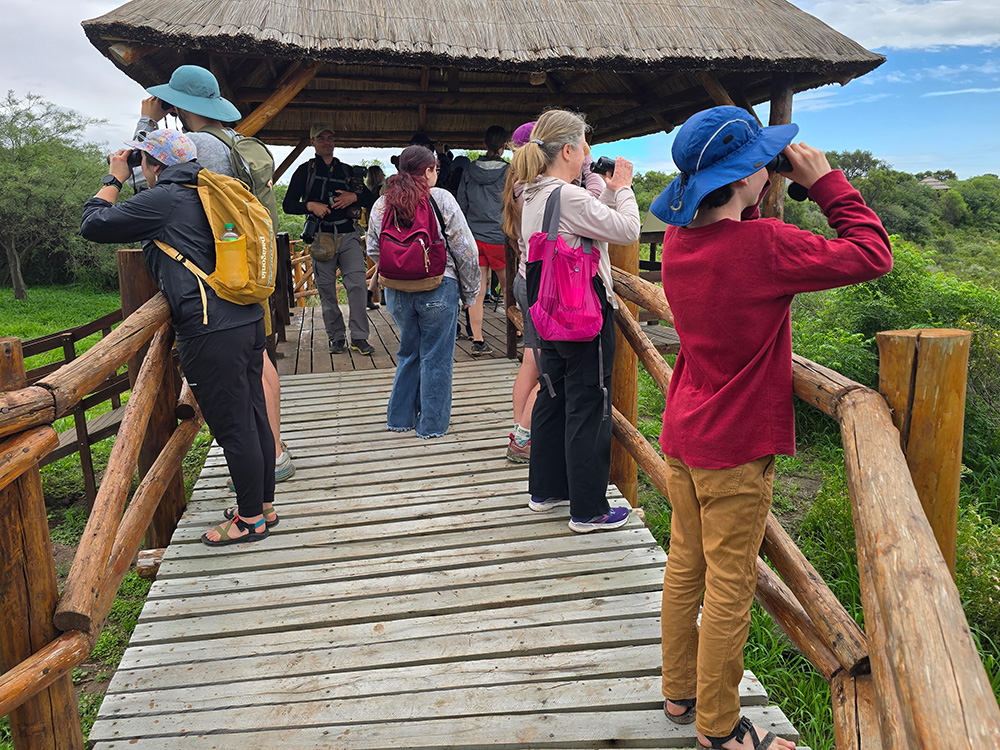
The Forum brought together an inspiring network of partners from Mono Lake, Great Salt Lake, Walker Lake, and Manomet Conservation Sciences, alongside students, educators, and conservation leaders in Argentina’s Laguna Mar Chiquita area. Over three days, participants shared knowledge, explored the landscape, and reflected on the challenges and opportunities facing saline lake ecosystems.
Yessi and Diego were part of a panel with Argentinian students and shared their perspectives on participating in Experience Ambientalia, how the experience has affected their lives, and what the current participants can expect as they prepare for college.
The event culminated in the inaugural Ansenuza Migratory Festival, a three-day celebration of community and migratory birds. Guided sunrise birdwatching, expert talks, hands-on art workshops, and a vibrant fair featuring local artisans and environmental organizations brought together science, culture, and community along the shores of Laguna Mar Chiquita.
Together, this growing network reflects a shared commitment to protecting saline lakes across the hemisphere, grounded in science, community, and the understanding that these ecosystems are more connected than they may appear.
Eastern Sierra expansion
Three years in, the Experience Ambientalia program continues to spark increasing local interest and support. The Eastern Sierra chapter of Experience Ambientalia has now grown to include students and educators from three high schools in Mono and Inyo counties. It is clear that the program provides students with unique, and powerful inspiration. Seeing our program alumni help inspire and support the next class of students and being able to off er the experience to more students is extremely motivating as we work to provide an exchange with Laguna Mar Chiquita for our students this coming summer.
About the Experience Ambientalia program
Experience Ambientalia is a community group that connects young people to their home ecosystems, introduces them to sister saline lakes across the Western Hemisphere, and encourages environmental stewardship. It was launched in 2021 by Fundación Líderes de Ansenuza, Manomet Conservation Sciences, and the Western Hemispheric Shorebird Reserve Network at Laguna Mar Chiquita in the Cordoba Province of Argentina. The program came to Mono Lake in 2022 because Laguna Mar Chiquita and Mono Lake are sister lakes that provide critical habitats for Wilson’s Phalaropes, a migratory shorebird that is at risk due to the declining health of saline lakes worldwide.
This post was also published as an article in the Winter & Spring 2026 Mono Lake Newsletter. Top photo by Teri Tracy.