This essay, written by Marc Del Piero, appears in the 2026 Mono Lake Calendar.
“The price for the protection of water rights is vigilance.” —Attributed to Henry Miller of the Miller-Lux Ranch
Now is the time that all residents of California and the friends of Mono Lake need to rise up to convince the members of the State Water Resources Control Board to finish the anticipated restoration of Mono Lake and its tributary ecosystems by completing the contingent provisions and restoration requirements from Decision 1631. When the decision was handed down it was characterized as “doing the right thing.” Direct and unwavering supervision by the State Water Board itself is the only way to finish those requirements of that herculean water rights decision from the 1990s.
Twenty-two years ago, in 2004, Geoff McQuilkin, the Executive Director of the Mono Lake Committee, called and asked me to write the essay for that year’s Mono Lake Calendar. Although a decade had passed, the memories of the process that led to the Mono Lake Decision (D1631) were still fresh in the collective minds of those of us who had toiled throughout the 46 days and nights of evidentiary hearings in 1993–94. In my capacity as the Vice-Chair and Water Rights Hearing Officer of the State Water Resources Control Board, I had read every report and more than 1,000 evidentiary exhibits produced by every interested party, annotated the entire Environmental Impact Report, and conducted the hearings from start to finish.
Now, as I write this prologue to the 2026 Calendar, I am once again filled with proud memories, thoughts, and emotions about a moment in time in California when things went remarkably “right.” I remember the expressed joy of Executive Director Martha Davis and Mono County Supervisor Andrea Lawrence on the day of the final Board hearing. But, I am also left wondering why, after more than three decades since D1631’s unanimous adoption by the Board, the current Board has not yet compelled the Los Angeles Department of Water & Power (DWP) to increase the stream releases and decrease diversion flows so as to complete the restoration of the lake level to the surface elevation of 6,392 feet, which is called for in D1631. Of the multitude of parties to the D1631 hearings, not one “stakeholder/litigant” objected or filed appeals of the Board’s final decision (not even the senior management of DWP, which had spent tens of millions of taxpayers’ dollars on every conceivable study and report to try to oppose the reduction of its entitlements). Now, it is clearly time for the current State Water Board to finish doing the Right Thing.
Mono Lake has always been an anthology of personal stories, “Old West” tales, human frailties, nefarious intrigue, and big personalities. It is a geologic history. It is a story of marginalized Native Americans (the Kootzaduka’a Tribe), anonymous explorers, and gold and silver miners (mostly failed and penniless) looking for one last strike. It is about legendary, greed-driven Southern California “city fathers,” land developers, and their avaricious engineers promoting urban growth and their own careers with water, taken without discussion, from other counties and landowners. It is about dried stream beds, dead birds, dead fish, and ignoring 19th century statutory protections for the once-abundant fisheries in the streams that Los Angeles dammed. It is a history of intellectual brilliance and shallow-minded egos, “old boy” backslapping and political backstabbing, mythic audacity, and persistent vigilance.
It is this political intrigue that continues to compel the attention of all Californians. And it is this history that has allowed past members of the State Water Board to demonstrate the political backbone and bravery that is necessary to definitively right past environmental mistakes that were spawned by that intrigue.
In the case of the State Water Board water rights hearings, that process began in the late 1970s with the establishment of the Mono Lake Committee by the prophetic David and Sally Gaines. Then, the lake level was dropping like a stone, the tributary streams were dry, PM-10 air pollution in the basin was among the worst in the entire country, the lake’s environmental habitats and migratory bird populations had been virtually wiped out by DWP’s engineering decisions, and the original fisheries (as definitively documented by state fisheries biologist Elden Vestal) had been sacrificed on DWP’s altar of urban sprawl. The litigation filed by the Mono Lake Committee and others forced open the doors of the previously closed state water rights review process.
The National Audubon Decision by the California Supreme Court in 1983 began to change the environmental devastation that had resulted from the decades of failed leadership and disingenuous stewardship by DWP over the Mono Basin’s environmental resources. DWP’s then-management had acted like a slumlord over the Public Trust resources, the fisheries, the air quality, and stream habitats in the Mono Basin. The stranglehold that previously had been exercised by the non-elected engineers of DWP was further weakened by the CalTrout I and II decisions (1989) from the California Court of Appeals. Those decisions identified and mandated the criteria and process for ecosystems, water rights, and Public Trust hearings and restorations in the Mono Basin.
And finally, the cascade of bipartisan efforts to restore the Mono Basin and its Public Trust resources reached a new summit with the adoption of the State Water Board’s D1631 decision. CAL-EPA Secretary Jim Strock was massively supportive of our efforts. 125 sworn witnesses presented testimony, and 17 attorneys conducted weeks of direct and cross examinations in the Bonderson Building Hearing Room. Importantly, D1631 was the work of a crew of our most dedicated State Water Board staff. Led by the late and brilliant Jim Canaday, a Senior Environmental Scientist, the team was composed of Steve Herrera, Rich Satkowski, Hugh Smith, and attorney Dan Frink, and they became like family.
Throughout the hearings that I conducted, those staff members were both selfless and dedicated to the revealing of the facts and evidentiary truths about the conditions within the Mono Basin, and what was needed to restore the Public Trust resources after 50 years of governmental neglect. They were always there. They pored over brilliant academic studies and legal briefs by Bruce Dodge, Patrick Flynn, Virginia Cahill, Scott Stine, Mary Scoonover, Richard Roos-Collins, and Peter Vorster for nearly a year. They sacrificed weekends and holidays with their families over the ensuing seven months after the hearings to complete a task that many in the “water industry” of California believed would never happen. Decision 1631 was and is their product. It is their gift to the citizens of California, their “affirmation of the duty of the state to protect the people’s common heritage in our streams, lakes, and tidelands.” Their efforts are legendary. They were and are my heroes.
Still, the completed and sustainable restoration of the Public Trust resources of the Mono Basin as conceptualized by the unanimous decision of the State Water Board in D1631 has not yet been realized. In spite of the regenerated riparian habitats on Rush and Lee Vining creeks, and the sustainable brown trout fisheries that have now grown in the streambeds that DWP had de-watered, and the somewhat reduced PM-10 air pollution, Mono Lake has not yet been allowed to reach the targeted 6,392-foot level. In spite of over three decades, and hundreds of thousands of acre-feet of snowmelt, and in spite of the sincere promises of Los Angeles Mayors and City Councilpersons and members of the DWP governing board, the non-elected staff of the Los Angeles Department of Water & Power has not complied with the restoration of the lake level that was established and accepted unanimously by EVERY interested litigant that appeared before the State Water Board between 1992 and 1994. So, now is the time for the current Board members to finish doing the Right Thing. Now is the time for them to demand “Why has it not been done?” NOW, RIGHT NOW, is the time for a new generation of heroes to Save Mono Lake.
Born and raised in Monterey County and the fourth-generation son of a California farming family, Marc Del Piero served as the Attorney Member of the California State Water Resources Control Board from 1992 to 1999. He also served in the California Army National Guard and on the Monterey County Board of Supervisors and was an Adjunct Professor of Water Law at Santa Clara University School of Law. Marc is married to Tina Tomlinson Del Piero, and has two sons, Paul and John.
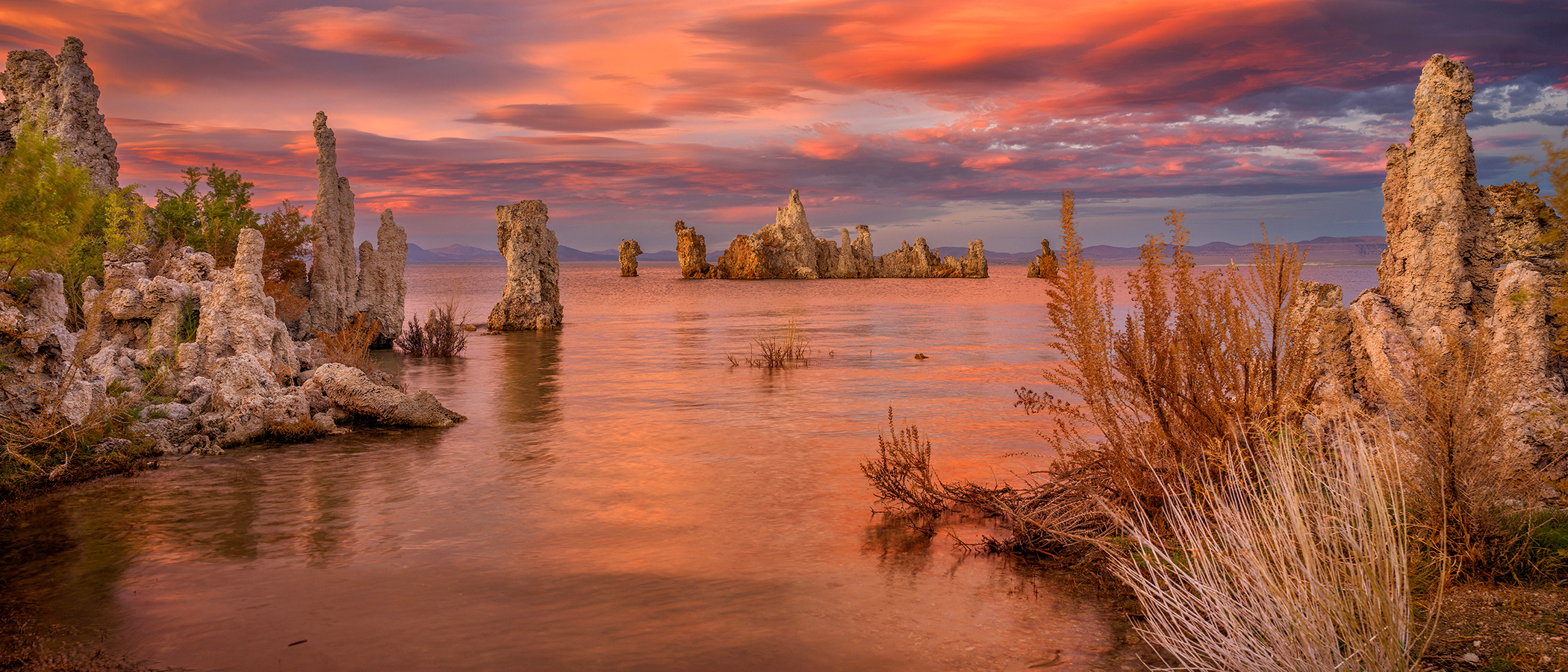
Top photo, “Summer, South Tufa,” courtesy of Lloyd Baggs.