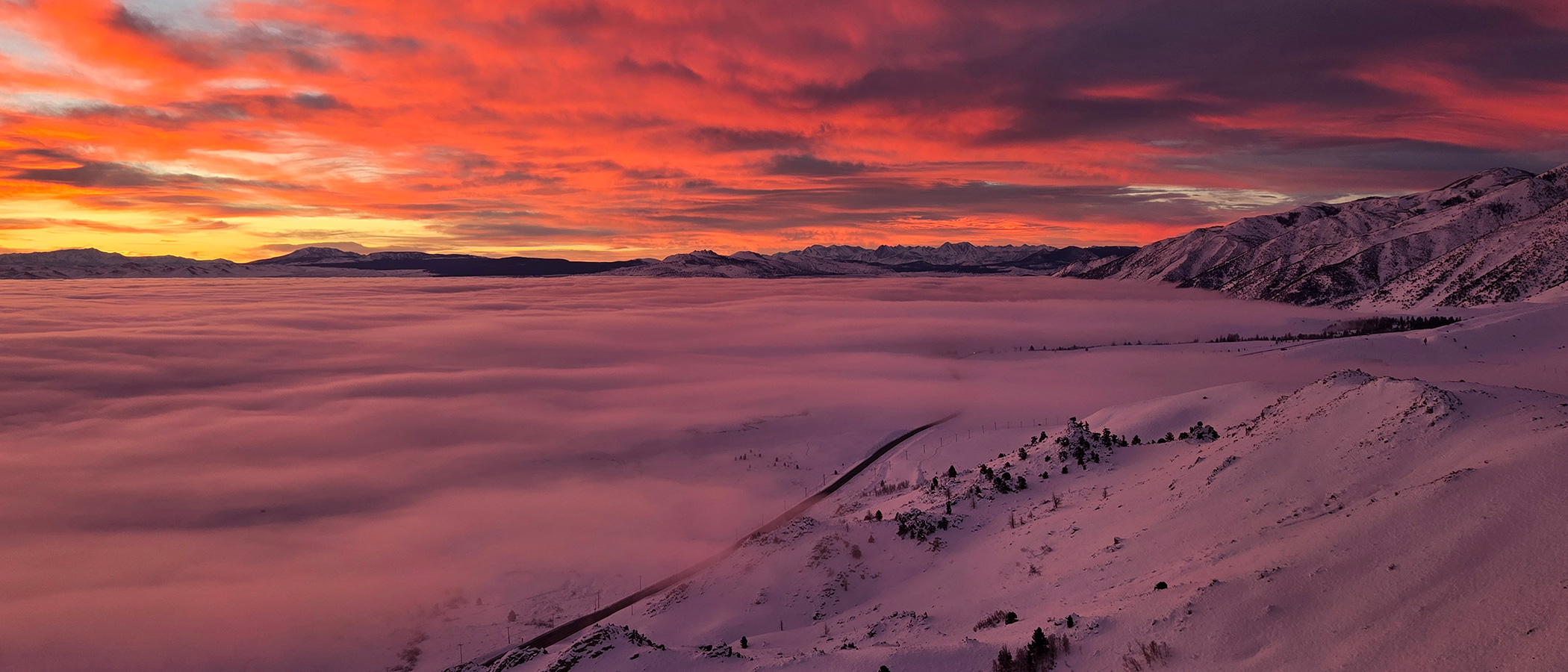
The Mono Basin has been mired in fog since late December 2025. Everyone is always quick to wax poetic about the beauty of the snow blanketed Sierra. They speak fondly of cozying up to warm fires on chilly winter nights. People love to gab about how great the skiing is. There’s also a winter weather phenomenon that doesn’t get the same glowing review. It’s often spoken of in an off-handed way, like the fine print of a contract or the postscript in a letter. “Poconip” they call it. I believe Mono Basin residents don’t like to think about it or utter its name lest it summons the gray weather.
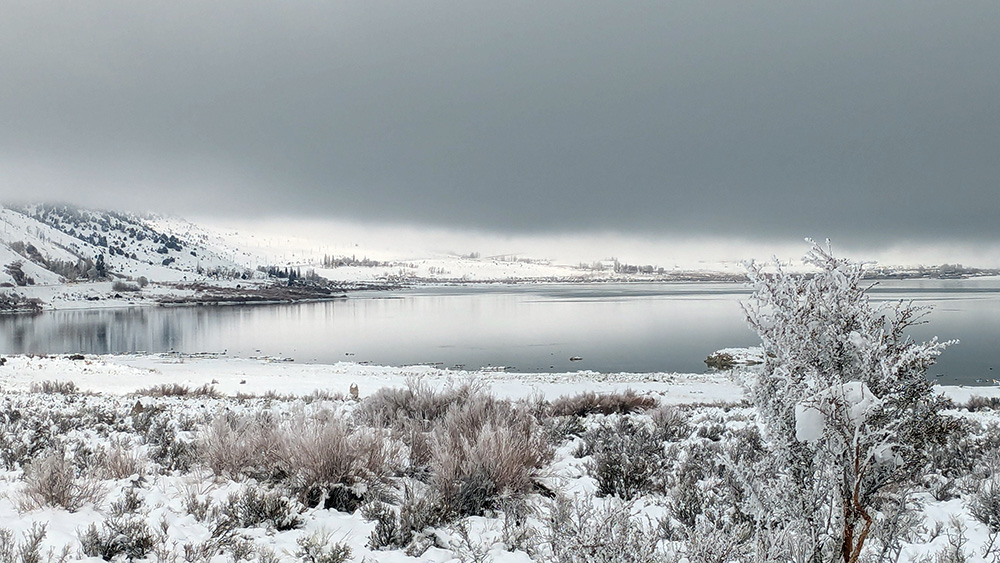
As an interpreter, I had to learn the science behind the poconip phenomenon. Mostly so I can explain it to travelers in the bookstore as they tell me (brag) about their time in the sun at Conway Summit or June Lake.
Poconip typically forms during calm weather when the ground is frozen or snow-covered, and it’s sunny in most other parts of the Eastern Sierra. Because Mono Lake doesn’t freeze (due to its high salinity) the lake continues evaporating all winter long. Imagine a single water molecule evaporating off the surface of Mono Lake—it’s in vapor form near the warm lake surface, but, as it rises away from the warmth of the lake, it cools and condenses directly into a tiny ice crystal. When many ice crystals come together, they form a cloud of low-lying ice fog.
POCONIP TIMELAPSE VIDEOS
These timelapse videos from the ridge west of Mono Lake show the poconip covering the Mono Basin to varying degrees:
Thick poconip on January 16, 2025
Poconip eventually lifting on January 21, 2026
There are two other notable things about poconip. When the fog sets in the temperature doesn’t fluctuate much, usually holding steady right around 19 degrees Fahrenheit. It’s 19 degrees and foggy all day long. The only redeeming factor is that poconip creates rime ice. The fog’s airborne water droplets are supercooled (colder than freezing but still in liquid form) until they come into contact with a colder-than-freezing surface where they then crystallize and freeze to that surface.
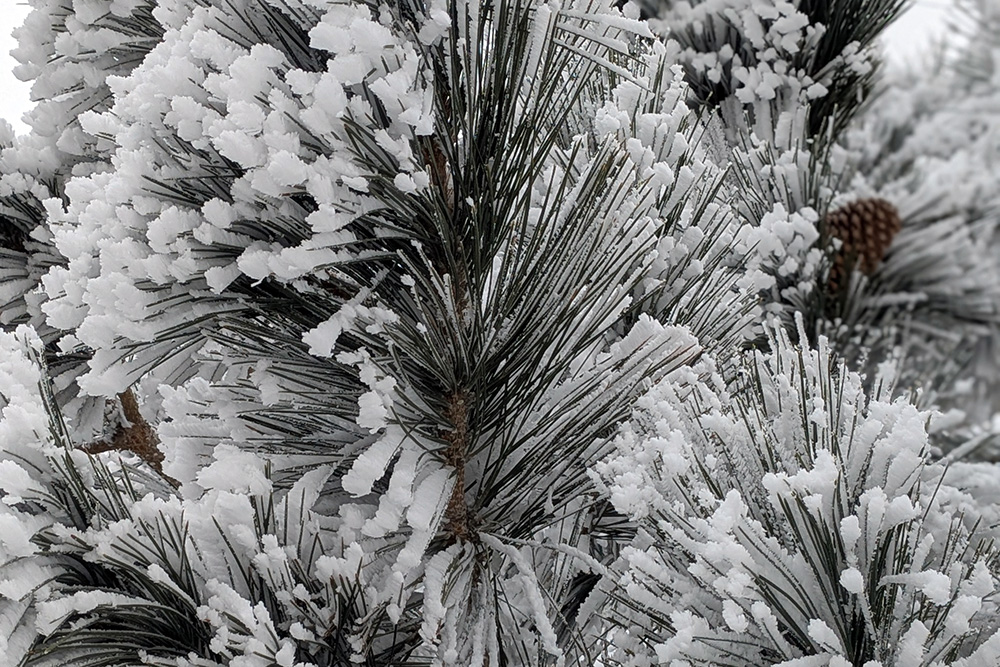
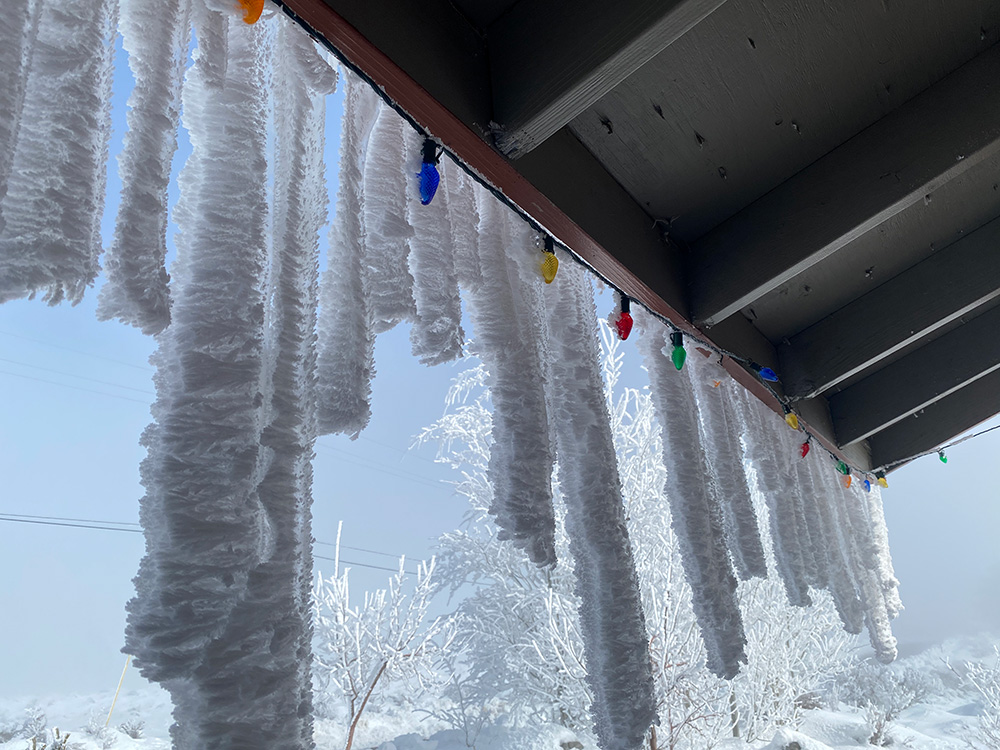
Poconip fog covers surfaces in rime ice, like these Jeffrey pine needles and icicles. Photos by Robbie Di Paolo and Elin Ljung.
Second, in the winter it’s common for mountain valleys and basins to experience temperature inversions that trap the fog right at the surface under a layer of warm air. A fog layer as thin as 500 vertical feet above Mono Lake (elevation: 6,383 to 6,883 feet) is enough to engulf the communities of Lee Vining and Mono City. It’s a cruel reality to be wrapped in that kind of cold with sunshine being so tantalizingly close that it feels as if I could jump and poke my head out of the clouds.
It’s not all bad. In a way, the poconip is a privilege. Meteorologists call it a “rare phenomenon.” Photographers come from all over to capture its beauty. The groves of pines covered in rime ice are straight out of a holiday card. And the many ways the fog settles in the basin is something to behold. It can be so thick one minute I can hardly see ten feet ahead. And the next minute it has blown away. My favorite poconip scene is when the sky clears right after sunset (which is the daily poconip pattern if we’re lucky). The light bounces around the icy fog, and it emanates this soft, bright blue color juxtaposed against the white ridgeline. It’s blue hour turned up to 11. And of course, poconip is the perfect excuse to put on my comfiest sweatpants and have a lazy morning by the fire.
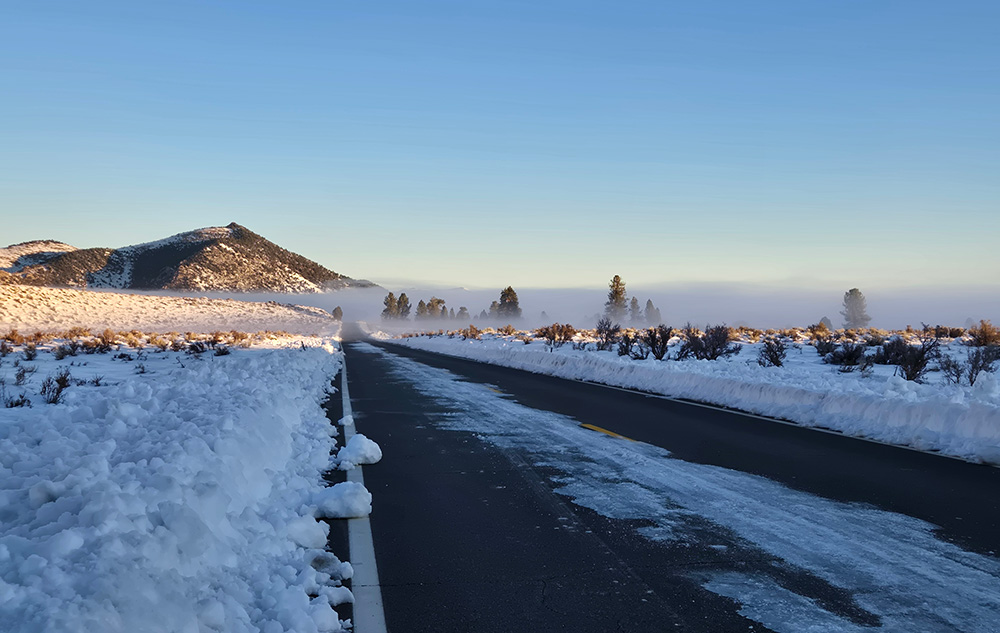
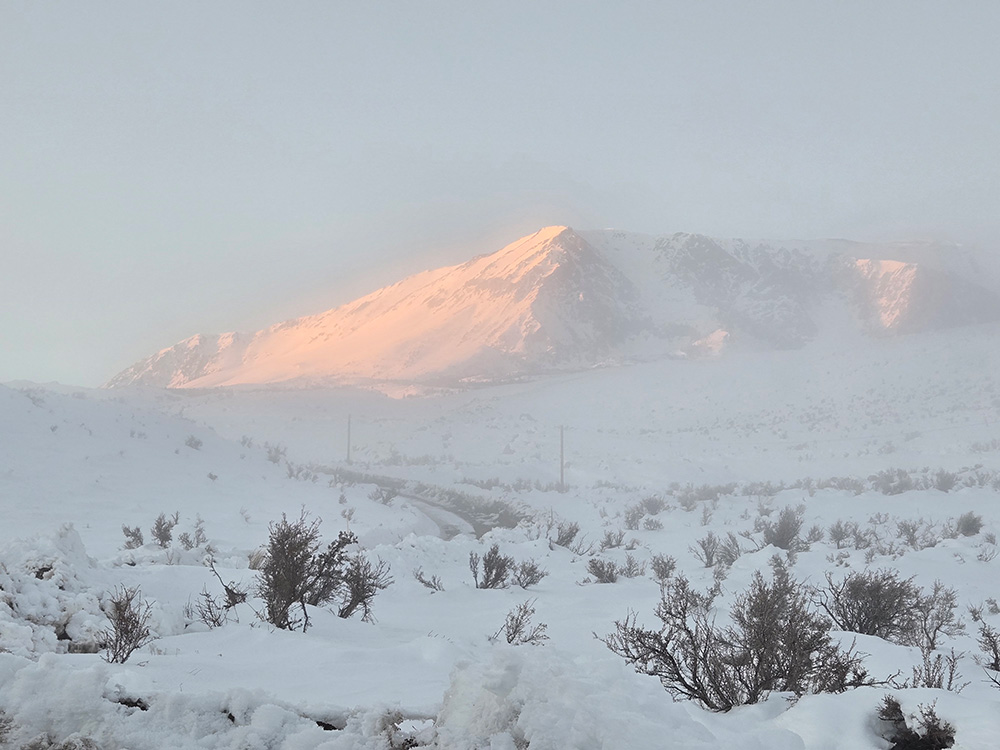
Poconip fog ebbing and flowing at the western edge of the Mono Basin on January 19, 2026. Photos by Hannah Ashby.
You know what though? It actually is all bad! I have been working in the gray for over a week now. And it is starting to get a little old. In the office, cabin fever is setting in. I’m finding myself drinking way too much coffee just to feel something. Trying to fill the hole the sun has left behind. And the dang sun keeps playing with my optimism, making me believe it will clear for a while. And maybe I can feel its life-giving rays on my face for a few minutes.
December started warm and dry because a high-pressure ridge parked itself over the western US. Residents worried it was going to be a dry winter, and people’s typical winter recreation was limited due to the lack of snow. Luckily a Christmas storm dumped over four feet of snow in the basin and more in Mammoth Lakes, saving the winter season. Hooray!
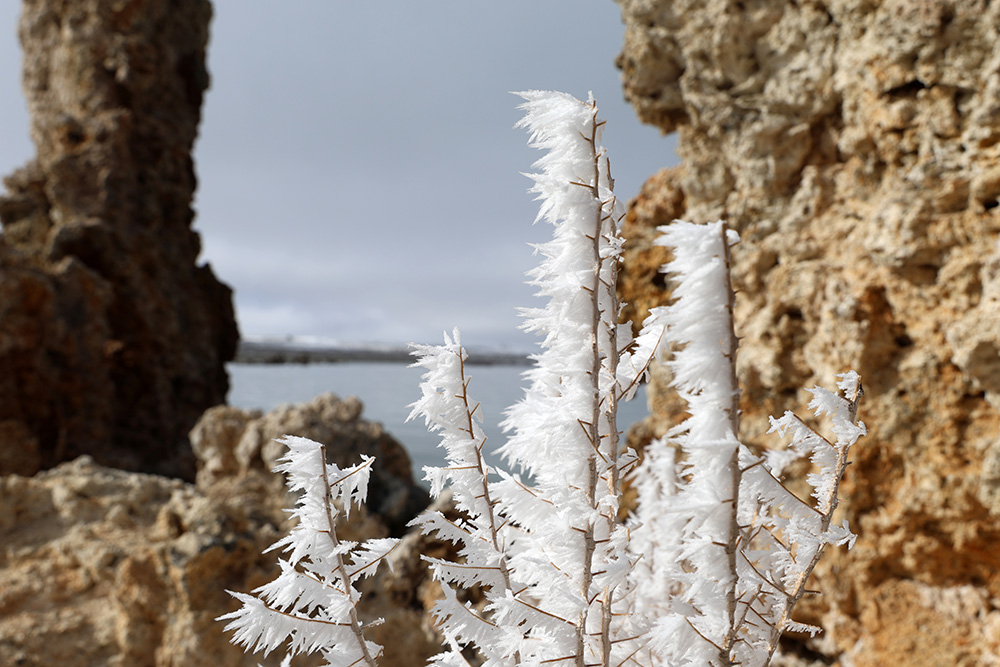
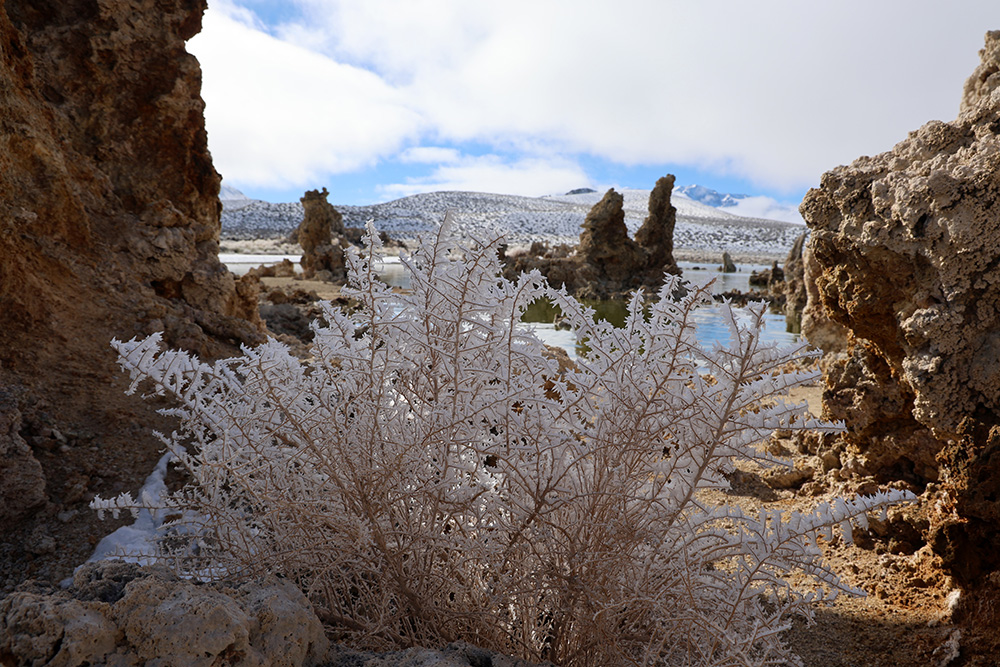
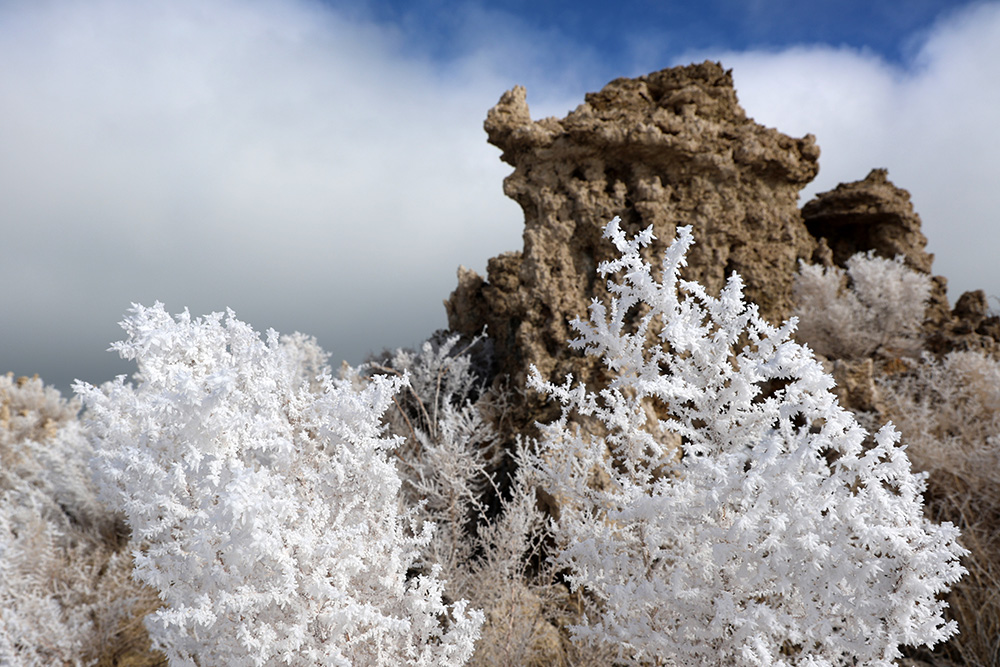
The fog lifted at South Tufa on January 13, 2026 to reveal beautiful rime ice crystals. Photos by Andrew Youssef.
Well, that snow and cold weather created the perfect conditions for poconip at Mono Lake. Now a similar high-pressure ridge has stalled over the western US again, further exacerbating the temperature inversion. This time around though, everyone else on the Eastside has snow and sun, and we in the Mono Basin have … fog. It just isn’t fair! I’ll admit some jealousy slips out when my friends in Mammoth say things like “60 degrees and bluebird.”
I’m acting like DWP, complaining about something I have complete control over and have the means to rectify. I escape the fog when I can. When I go skiing on my weekends at June Mountain, and I see the blanket of poconip where there is usually a very large lake, I mutter “those suckers” under my breath as I rip another lap. I drive up Tioga Road on my lunch breaks with a lawn chair and sprawl out in the sunshine. It turns out I don’t need to be able to jump 500 feet to poke my head out of the clouds.
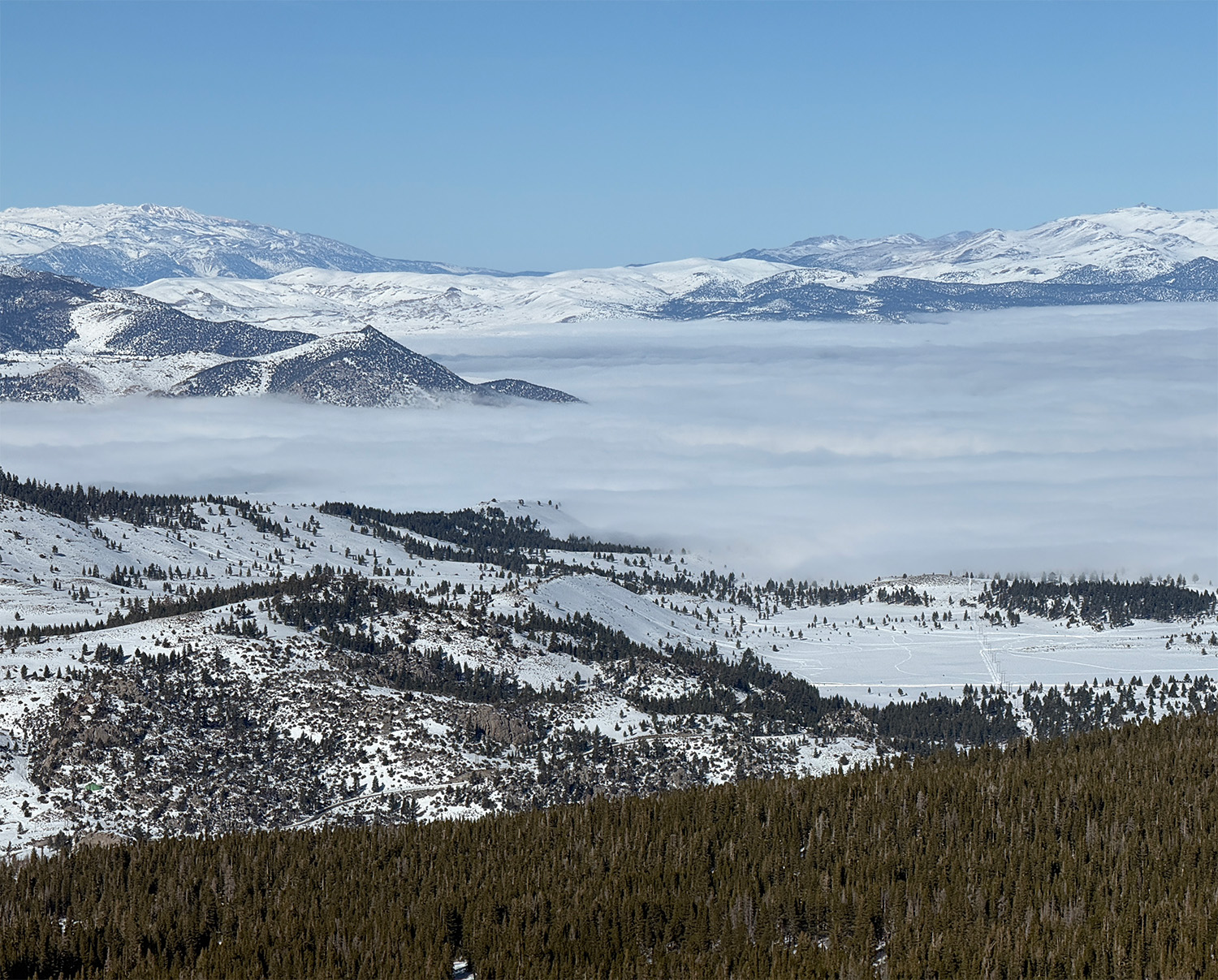
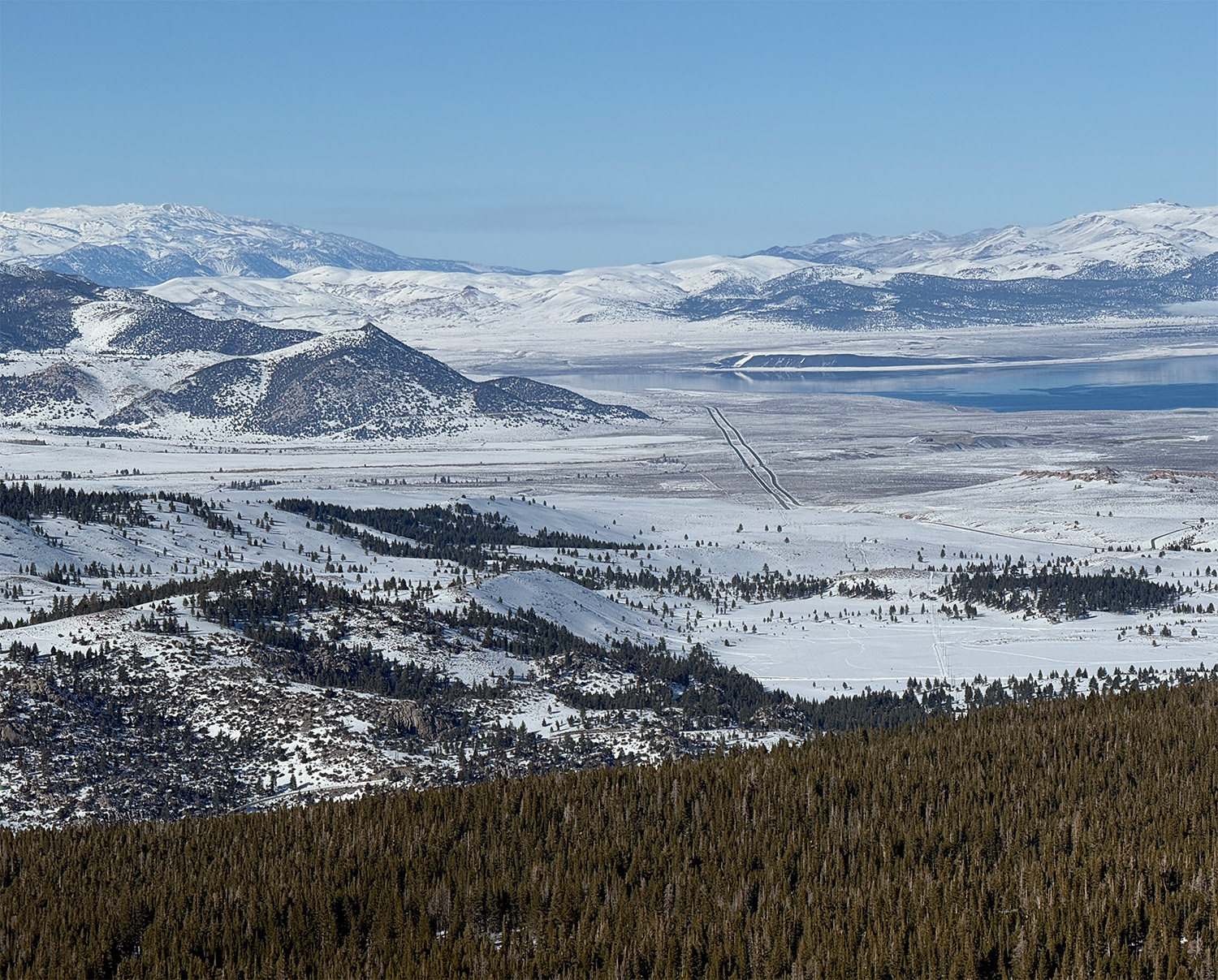
Recently, I forced myself out of bed before dawn because my co-worker, Hannah, recommended I experience a poconip sunrise at Conway Summit. It was bitterly cold even out of the fog, but the Mono Basin full of fog in the morning sun just may be what heaven looks like.
I’ve stopped looking at the long-range forecast and have accepted my life in the soup. My optimism is waning, but who knows, maybe today will be the day the fog breaks for good.
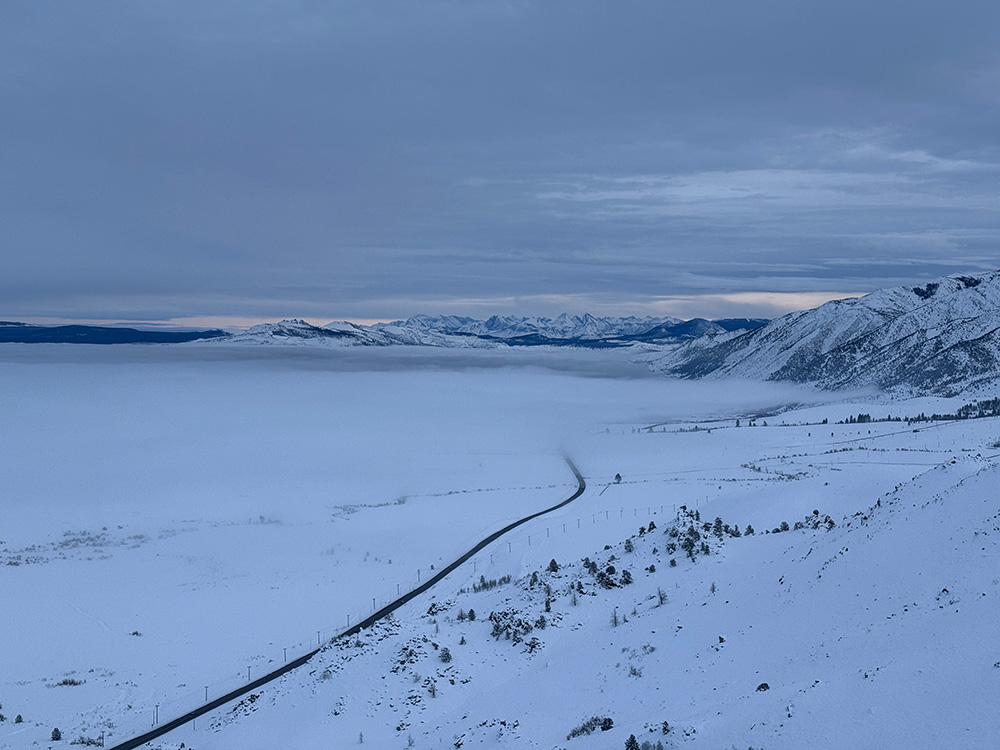
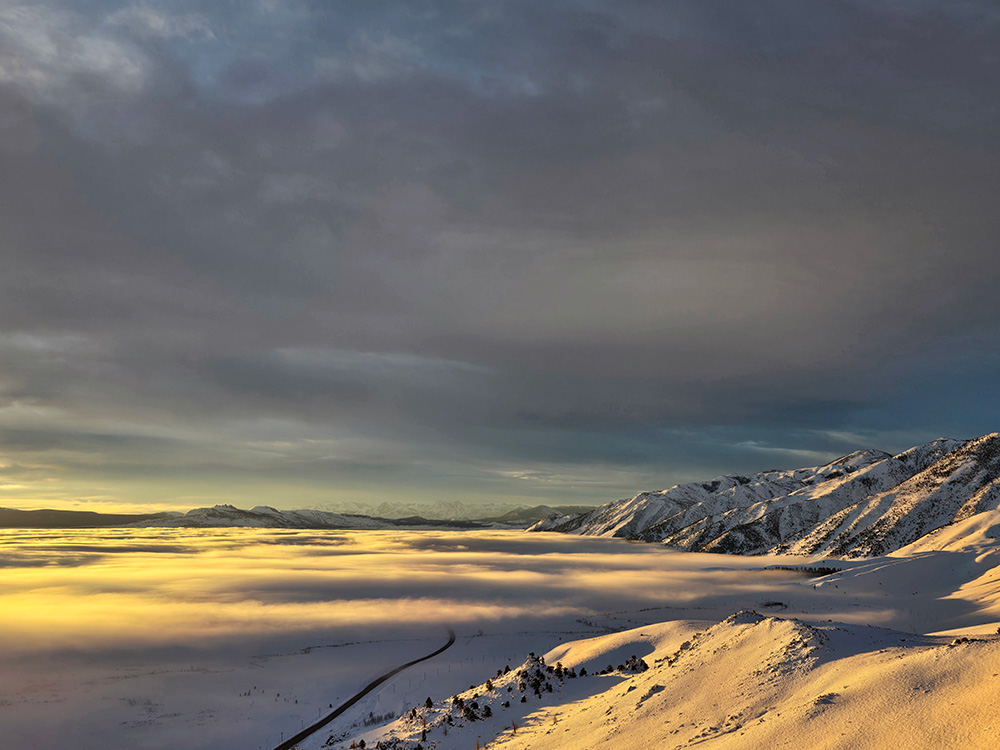
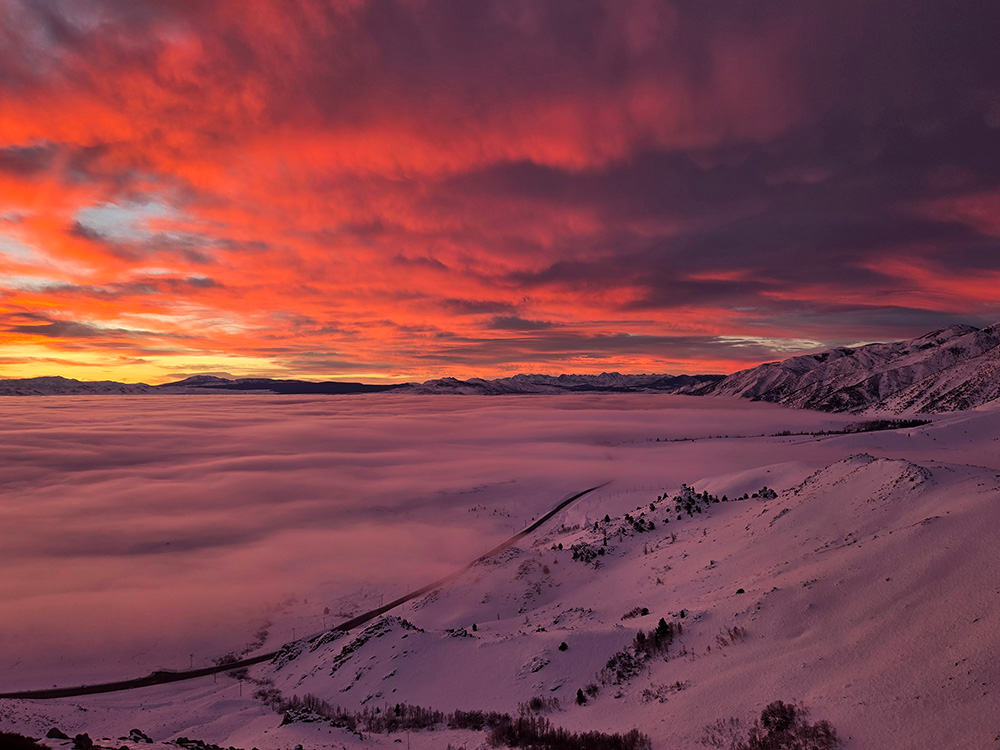
Views of the poconip-shrouded Mono Basin from Conway Summit on December 30, 2025 (photo 1) and January 18, 2026 (photos 2 and 3) during a heavenly sunrise! Photos by Andrew Youssef and Hannah Ashby.
For more about poconip in the Mono Basin, check out these posts:
- February 2023: Notable poconip fog at Mono Lake
- January 2016: Mono Basin winter photo album
- January 2013: A photo essay in the ice fog
Top photo by Hannah Ashby.
Wow! Great photos, lovely article.
Thanks for the detailed article and great photos. If it’s any consolation, over here in the San Joaquin Valley (Fresno/Clovis) we have been experiencing our California winter in much the same way. In January it was 34 degrees F. and foggy all day, the fog just hanging above the ground. It may have warmed up to 43 degrees while the mountain communities that surround us had all the sunshine and warmth. We still wake up to fog most mornings. We all need rain and snow to get our sunshine back! I still love California!