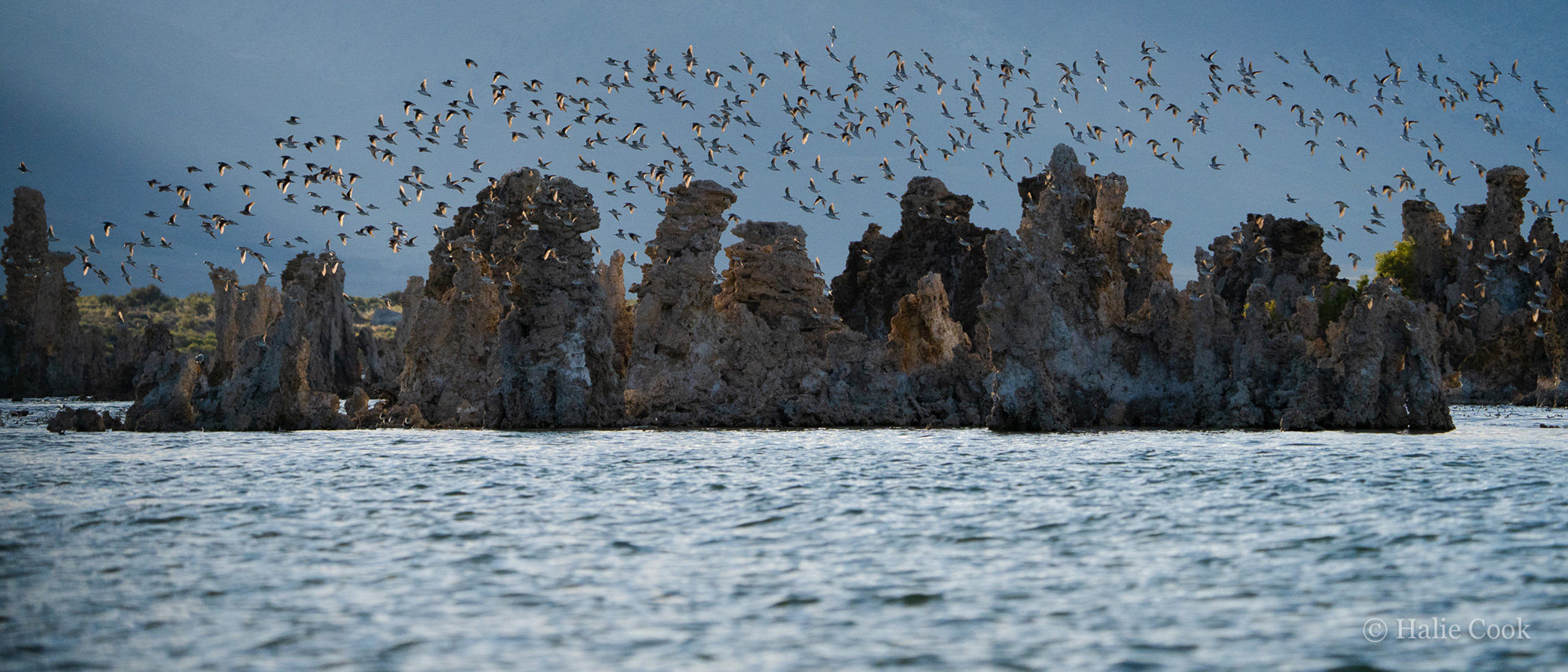
Last week Wilson’s Phalaropes, the small shorebirds that rely on saline lakes like Mono Lake, inched toward protection under the Endangered Species Act. The US Fish & Wildlife Service (USFWS) released a “positive 90-day finding,” which advances the birds to the next stage of review to determine if they should receive protection under the federal law. Wilson’s Phalaropes depend on saline lakes like Mono Lake and Great Salt Lake, and the positive finding underscores the importance of implementing durable protection for these imperiled ecosystems.
The finding comes in response to a petition submitted in March 2024 that cited hydrologic and climate evidence showing that chronically low lake levels at Mono Lake, Great Salt Lake in Utah, and Lake Abert in Oregon—essential habitats for the migratory species—put the phalaropes at risk of extinction due to habitat loss. The Mono Lake Committee was a co-signer to the petition.
From the USFWS finding: “Based on our review of the petition and readily available information regarding freshwater diversion leading to declines in prey resources at primary fall staging habitats in California, Oregon, and Utah, and regulatory mechanisms to reduce this potential threat, we find that the petition presents substantial scientific or commercial information indicating that listing the Wilson’s phalarope as a threatened or endangered species may be warranted.”
This positive finding reinforces the need to protect saline lakes for phalaropes, which in turn adds helpful pressure to the regulatory agencies already tasked with protecting the lakes, like the California State Water Resources Control Board for Mono Lake and the Utah government for Great Salt Lake. Great Salt Lake has been lower than its healthy range since 2002 and Mono Lake is still nine feet lower than its healthy level.
The 2024 petition to list the phalaropes was primarily written by phalarope researcher Ryan Carle. Along with the Mono Lake Committee, co-signers included the Center for Biological Diversity, Utah Physicians for a Health Environment, Utah Youth Environment Solutions, author Terry Tempest Williams, and scientists Ben Abbott, Ron Larson, Nathan D. Van Schmidt, and Kyriana Tarr.
The USFWS will next conduct their own review of the phalaropes’ status and threats, and whether or not they warrant protection under the Endangered Species Act, eventually reaching a decision on listing. Given that the “90-day finding” process took two years, a decision about listing the birds is likely to take many more.
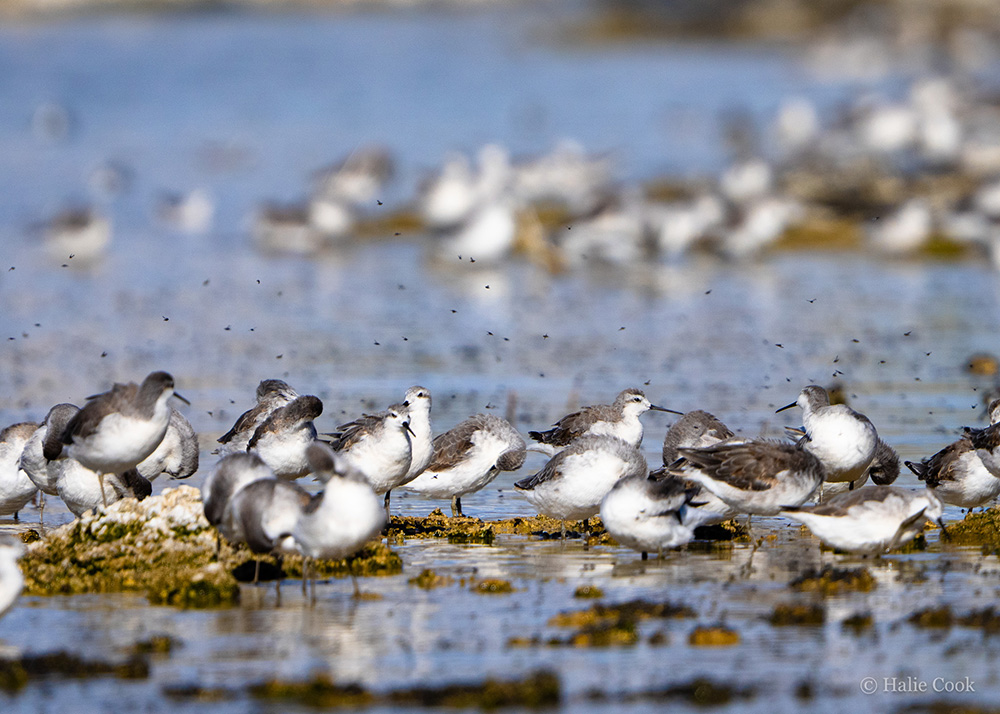
More about the Wilson’s Phalaropes:
- Center for Biological Diversity press release
- Federal Register link to formal decision document
- Wilson’s Phalarope listing proposal
- Salt Lake Tribune news article
This post was also published as an article in the Winter & Spring 2026 Mono Lake Newsletter. Top photo courtesy of Halie Cook.