Volume of DWP diversions equivalent to Mono Lake’s drop over the last 12 months
Los Angeles has multiple sources of water, with some local sources funded specifically to offset Mono Basin diversions. Mono Lake, on the other hand, has no additional sources of water other than runoff and precipitation. When the Los Angeles Department of Water & Power (DWP) takes Mono Basin water instead of using the local sources to which it has access, it slows down Mono Lake’s rise, degrading and threatening the Mono Basin ecosystem.
When Mono Lake’s level is steady, it means that inflows are balanced with evaporation. But to reach its required management level of 6,392 feet above sea level—ten feet higher than it is now—Mono Lake needs an additional 450,000 acre-feet of water. In other words, inflows must exceed evaporation by that much water to raise the lake. If spread across 20 years, that would be an additional 23,000 acre-feet per year with an average rise of about half a foot each year.
Coincidentally, that amount of filling—23,000 acre-feet—is about the same volume of exported water that DWP chose to divert from Mono Lake’s tributary streams over the past 12 months. Although technically allowed, these water diversions show that the health of Mono Lake is not a factor in DWP’s aqueduct operations decisions.
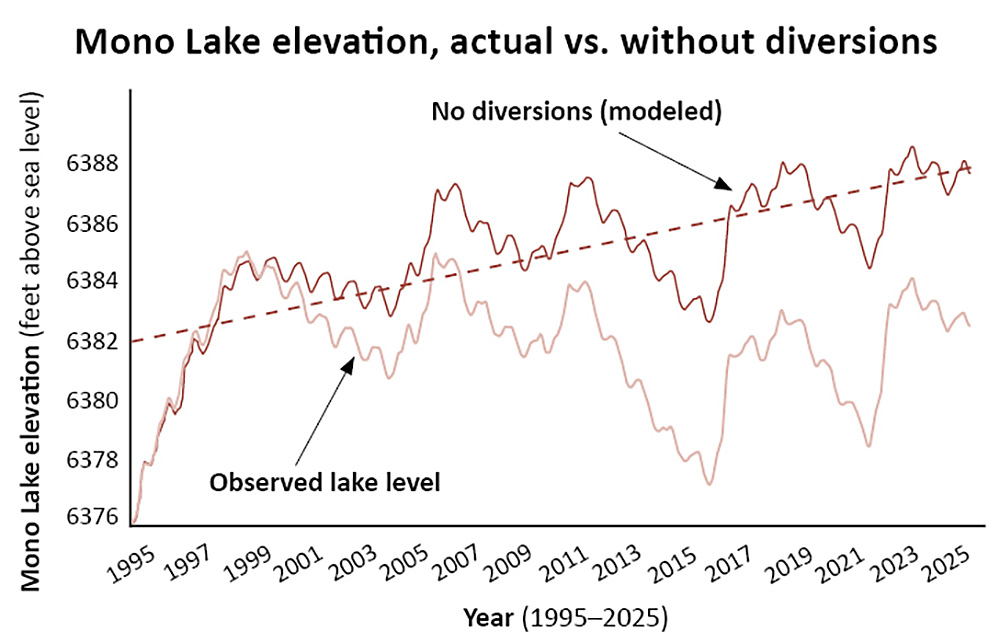
Imagine you stood with your toes touching the water at the Mono Lake shoreline on August 1, 2025 and then returned to the exact same spot on August 1, 2026. This year you would have been standing with dry feet a little farther away from the water, since Mono Lake has dropped almost two inches over those 12 months. During that time, DWP exported 23,455 acre-feet of stream diversions to Los Angeles, equivalent to about six inches of lake level rise if left undiverted. Had those 12 months of stream diversions flowed to Mono Lake instead of LA, you would be standing in ankle-deep water. Unfortunately, DWP’s diversions have prevented that rise.
The reason this is happening: DWP always takes the maximum amount of water allowed, because it can. The diversion rules set in 1994 aren’t working, and DWP, when planning its annual exports, is ignoring its own remarkable successes in growing its local water supply in LA—well beyond the amount needed to allow a pause in Mono Basin diversions (see page 8).
The diversion rules allow DWP to make environmentally responsible choices for Mono Lake, but DWP has made it very clear that unless the rules are changed, it is taking every drop. That’s why that water will continue to flow toward LA instead of Mono Lake until the California State Water Resources Control Board holds the hearing and votes to pause diversions.
If we imagine that the State Water Board had paused surface water exports during those same 12 months, and you were standing ankle-deep in a rising Mono Lake, it does not mean that LA would have been completely cut off from its Mono Basin water supply. DWP would still have exported approximately 5,000 acre-feet of groundwater from the Mono Basin during those twelve months.
The future climate is unknown, but modeling shows there is an opportunity right now to deliver the water needed to raise Mono Lake, before climate change impacts make it more difficult. The best available climate and lake modeling show that Mono Lake will rise if DWP pauses stream diversions, but DWP won’t do that on its own. DWP needs to be told what to do, which the State Water Board can do by upholding its promise to revisit diversion rules and pause stream diversions now to allow Mono Lake to rise to its overdue Public Trust level.
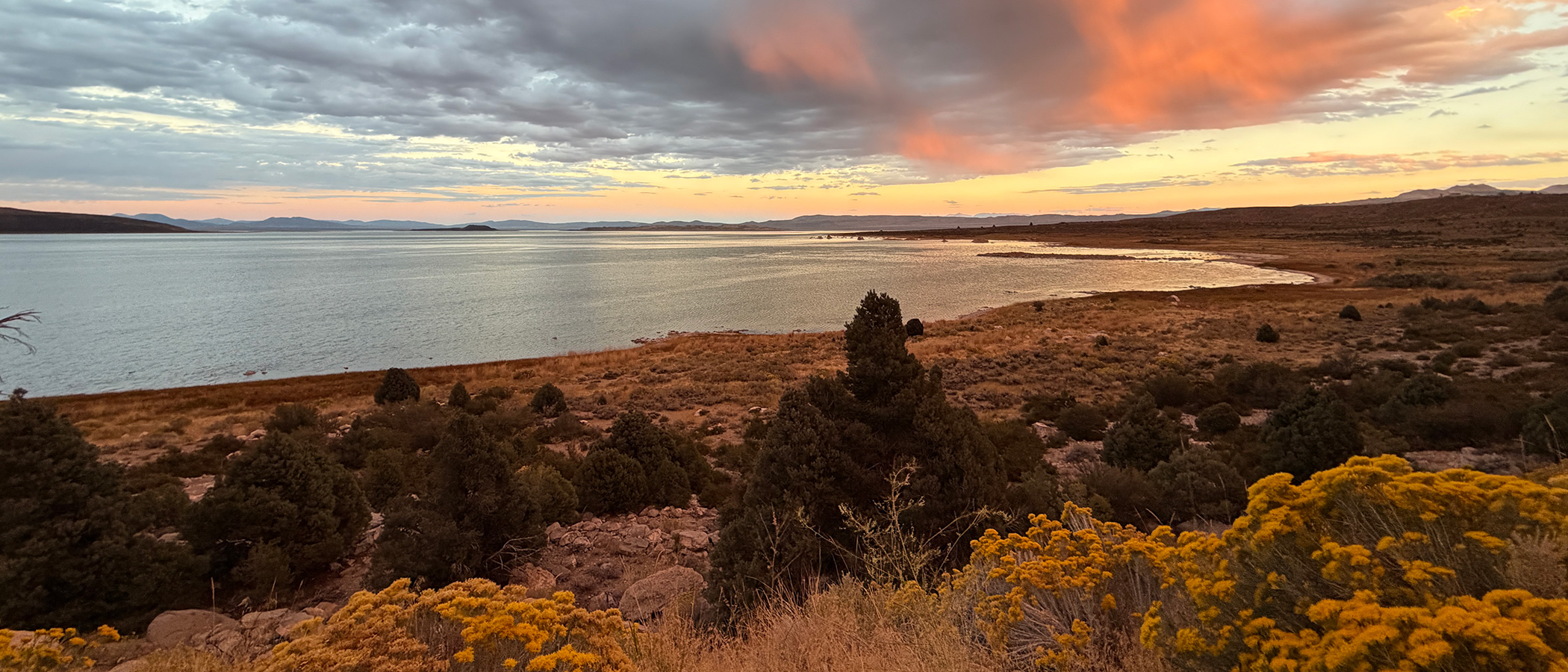
This post was also published as an article in the Fall 2026 Mono Lake Newsletter. Top photo by Elin Ljung.